
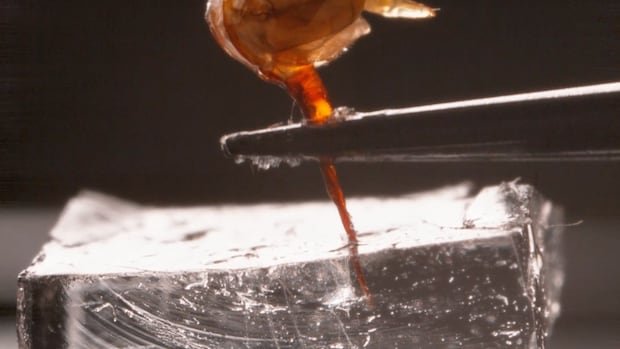
A western honey bee’s stinger is a final line of defense, meant to embed itself and inject venom, often leading to the bee’s demise. New findings published in the Proceedings of the National Academy of Sciences shed light on the effectiveness of this defensive mechanism. Fiorella Ramirez Esquivel, the lead researcher from Macquarie University, Australia, emphasized the use of modern cameras to capture the bees’ actions in real-time.
In their study, Ramirez Esquivel and her team utilized high-speed cameras to observe the rapid bee stinging process. By exploiting the translucence of the venom sac and stinger, they employed strong lighting to highlight the internal structures. Live honey bees were used in the experiments, with researchers swiftly removing the stingers post-sting, as they remain active for only about two minutes after separation from the bee’s body.
The research unveiled a dual-valve system within the stinger, functioning simultaneously to drive the stinger deeper into the target and pump venom from the sac. This mechanism, termed the “double piston design,” is intricate, requiring precise movements for venom release and stinger propulsion. The team used 3D printing to replicate this movement and gain a deeper understanding of the process.
Experts not involved in the study, like Juliana Rangel from Texas A&M University, found the videos captivating, offering insights beyond traditional microscopic images. The study delves into how the honey bee’s defense mechanism evolved to protect its colony, employing autotomy to sacrifice part of its body. The stinger’s barbed design aids in remaining embedded, releasing pheromones to signal other bees for defense.
While the defense mechanism may not always be effective against tougher skin, the continuous penetration improves the odds of deterring threats. The intricate system of the honey bee stinger has fascinated researchers and could potentially have applications in various fields. The study’s revelations through high-speed videography offer a deeper understanding of this complex biological system.

