
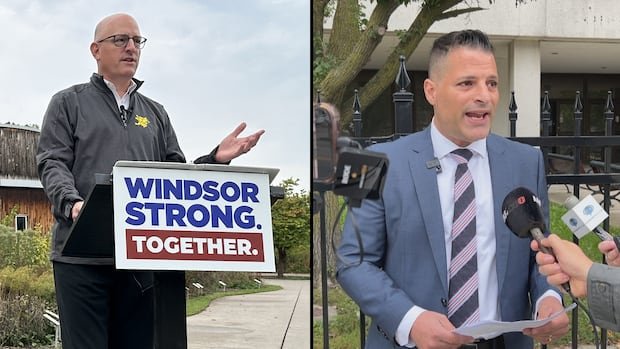
Windsor’s mayoral contenders, Drew Dilkens and Fred Francis, hosted separate events on Thursday morning to outline their visions for the city’s future. Dilkens, the incumbent, emphasized a comprehensive parks and public spaces restoration initiative, while Francis presented a detailed strategy focused on rejuvenating the downtown area.
Dilkens, vying for re-election, announced his plans at Ojibway Nature Centre in Ojibway Park, pledging the most extensive parks and public spaces rehabilitation program in the city’s history. In contrast, Francis conducted his press conference outside the former central library near the Downtown Mission, highlighting downtown revitalization as a key aspect of his campaign.
Dilkens defended the city’s expenditures on projects like the Civic Plaza, stressing the importance of investing in public spaces alongside fundamental infrastructure. He emphasized the significance of public spaces in fostering a sense of community, particularly highlighting community parks like Lanspeary Park Super Playground, Ojibway National Urban Park, Peche Island, and Sandpoint Beach in his plans.
Moreover, Dilkens assured ongoing investments in playgrounds and public spaces, citing the replacement or upgrade of 124 playgrounds with an allocated budget of approximately $30 million. He also committed to the development of Ojibway Prairie Complex as a national urban park while preserving free public access.
Addressing specific projects, Dilkens outlined progress on Sandpoint Beach’s master plan with an estimated $15 million cost and funding set aside. He also mentioned protective measures for Peche Island against shoreline erosion to ensure its preservation for the foreseeable future.
In terms of fiscal management, Dilkens emphasized delivering projects within the existing capital budget framework rather than resorting to increased taxation and spending. On the other hand, Francis’s plan centered on safer streets, homelessness, public safety, housing, economic development, and the replacement of the downtown library.
Francis proposed a four-point plan focusing on public safety, coordinated support services, enhancing downtown livability, and attracting people and investments back to the city center. One of his primary initiatives would be establishing a Downtown Safety and Outreach Command Unit, integrating various services to address community needs effectively.
Additionally, Francis advocated for expanded mental health and addiction treatment services, affordable housing initiatives, and a housing-first approach to combat homelessness. He also emphasized the importance of a permanent downtown central library as an essential component of his platform.
Furthermore, Francis suggested incentives to repurpose vacant office buildings into residential units, eliminating parking requirements, rezoning downtown for higher density, and establishing a downtown development concierge to streamline investment processes. He proposed initiatives to utilize empty storefronts for temporary businesses, alongside appointing a downtown economic lead to facilitate investment and business development.
Francis contrasted his vision with Dilkens’s track record, highlighting the perceived lack of downtown improvement during the incumbent’s tenure. He underlined the need for change and criticized the current administration’s effectiveness in addressing downtown challenges.
As the mayoral race unfolds, voters will have the opportunity to evaluate the candidates’ platforms and records before the election day on October 26.

