
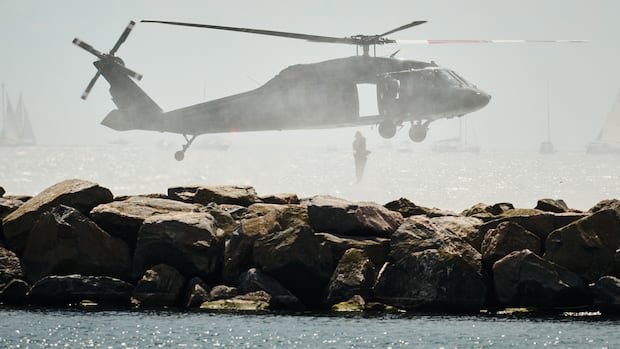
In a recent development, the Canadian government discreetly halted the acquisition process for 16 U.S.-manufactured UH-60M Black Hawk helicopters, intended for deployment by Canada’s special forces. The decision to pause this purchase was made just before trade discussions commenced with the Trump administration last year.
The procurement of these helicopters from Sikorsky, a subsidiary of Lockheed Martin, was put on hold due to escalating trade tensions and diplomatic strains with the U.S. The purchase, which had received approval from the U.S. State Department for foreign military sales and was nearing congressional endorsement, was stalled prior to the trade negotiations in Washington.
The decision was influenced by the unsuccessful trade talks and a broader assessment by Canadian officials regarding military acquisitions from the U.S. President Donald Trump’s policies have raised concerns about Canadian sovereignty, leading to the government’s reevaluation of its military procurement strategies.
Prime Minister Mark Carney’s administration, since taking office in 2025, has prioritized enhancing domestic defense manufacturing capabilities, fostering partnerships with foreign defense firms in Canada, and exploring international procurement as a last resort.
This pause in the Black Hawk purchase coincides with ongoing deliberations on whether to proceed with the acquisition of F-35 stealth fighters, also produced by Lockheed Martin. The government initiated a review of the fighter jet acquisition plan in late 2025 and has yet to finalize the purchase of the planned 88 aircraft.
As the evaluation continues, alternative options to fulfill the needs of Canada’s special forces are being considered, according to statements from government representatives. The government remains in dialogue with relevant partners to assess all pertinent information for decision-making.
The Black Hawks are envisaged as replacements for the CH-146 Griffon helicopters currently in use by Canada’s special operations forces. The superior range and operational capabilities of the Black Hawk, particularly in Arctic conditions, have garnered interest from Canadian commandos.
While the public sentiment leans towards reducing American military purchases, defense experts emphasize the importance of selecting equipment that best suits the military’s operational requirements rather than succumbing to short-term political pressures. The government’s handling of existing and future military procurements amid trade tensions reflects a complex interplay of political and strategic considerations.
Lockheed Martin, the manufacturer of the Black Hawk helicopters, has expressed readiness to support Canada’s defense needs despite the pause in the acquisition process. The company remains committed to collaborating with international customers seeking advanced military equipment.
In addition to the Black Hawk deal, other military procurement projects with U.S. firms have faced delays in approval and public announcement. The government’s cautious approach towards finalizing contracts with American defense suppliers underscores the evolving dynamics of Canada’s defense procurement landscape in the current geopolitical climate.

