
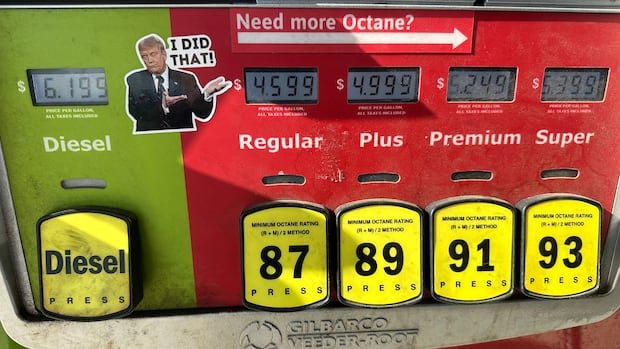
For almost a year, President Donald Trump has been urging voters to remain calm despite the increasing prices. Trump has dismissed worries about affordability as a scheme by Democrats, claimed consumer prices had dropped during his tenure when they had actually risen, and repeatedly predicted a decrease in gas and diesel costs following his actions against Iran. However, polls indicate that voters are not convinced by Trump’s assertions, giving him low ratings on the cost of living.
Recent polls show that over 70% of American respondents disapprove of Trump’s management of inflation. The latest inflation figures are not favorable for Trump and the Republican Party as they aim to retain control of the U.S. Congress in the upcoming midterm elections on November 3, less than three weeks away. The U.S. Department of Labor reported that the consumer price index rose by 3.7% in September compared to the previous year, primarily due to increases in fuel and clothing prices.
Spencer Kimball, the executive director of Emerson College Polling Center in Boston, highlights that polling indicates the economy is the top concern for voters across the U.S. leading up to the midterms. He emphasizes that the cost of living, rather than employment or taxes, is the underlying issue driving these economic concerns.
Kimball pointed out, “It appears that everyday expenses are gradually accumulating, causing people to worry about affordability.” He expressed skepticism about a quick solution to the rising gas prices and other associated living costs within the next three weeks.
President Trump’s recent cross-country travels to boost Republican chances in winning U.S. Senate seats underscore the political ramifications of the cost of living concerns. Tim Malloy, a polling analyst with Quinnipiac University Poll, characterizes Trump’s travels as a frantic effort to support Republican candidates who are now at risk of losing due to cost of living issues.
Malloy noted, “Gas prices are the predominant worry reflected in polling, with voters attributing blame to Trump.” He emphasized that voters are discontented with Trump’s unfulfilled promises and are expressing their dissatisfaction as the midterms approach.
In the community of Martinsburg, W.Va., residents are feeling the financial strain caused by rising prices. Individuals are resorting to food pantries and cost-cutting measures like baking their own bread to cope with the economic challenges. The impact of these economic concerns is expected to influence voter decisions in the upcoming midterm elections.

