
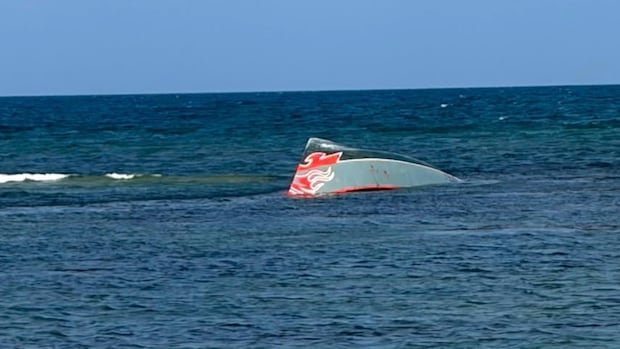
At least 139 individuals, including children, lost their lives when a boat carrying over 300 migrants overturned near Djibouti’s coast in East Africa, as reported by the International Organization for Migration on Sunday.
The official death toll accounts for those interred by Djiboutian authorities, with additional burials carried out by the migrants themselves pending verification by officials, stated Alexandre Coissac, the IOM’s chief of mission in Djibouti.
Coissac lamented the anonymous mass burials, highlighting the personal tragedies obscured by the lack of identification. The migrants embarked on the vessel on the evening of October 8, and it quickly sank due to overcrowding near the shore, Coissac explained.
Efforts by local authorities were overwhelmed as numerous bodies washed ashore simultaneously, remarked Coissac, underscoring the challenging situation faced during the aftermath.
Surviving migrants were being transported to the IOM rescue center in Obock for medical treatment and psychological support, as they were in a state of shock following the harrowing experience, according to Coissac’s observations on his visit to the shipwreck area.
The treacherous journey from the Horn of Africa to the Arabian Peninsula, where many migrants seek employment in wealthy Gulf countries, witnessed one of the deadliest shipwrecks, leaving at least 84 individuals still missing.
The vessel, en route from Djibouti to Yemen, capsized either on Thursday night or Friday morning, with over 80 survivors, all Ethiopian nationals, reported by the IOM. The UN migration agency in Geneva indicated that the boat carried 305 passengers, with fears of a rising death toll.
Personal belongings, such as shoes, believed to belong to the migrants, were spotted on a beach in a video shared by the IOM, as rescue operations persisted amid concern for the missing individuals.
The IOM emphasized the continuous migration flow from the Horn of Africa towards Gulf countries despite heightened conflict in Yemen, highlighting the perilous conditions migrants face in pursuit of better opportunities.
The recent tragedies underscore the urgent need for safe and legal migration routes, stressed Coissac, urging governments and donors to prioritize establishing pathways that can prevent such tragic incidents.

