
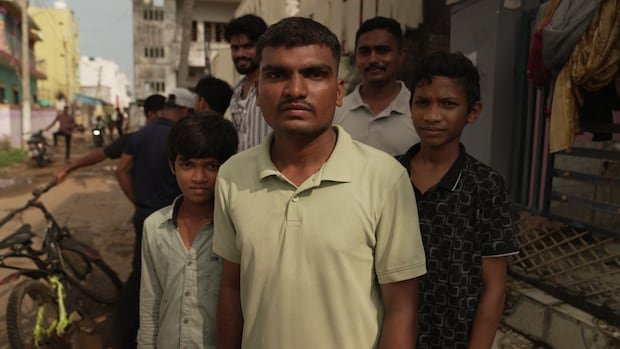
A cluster of farmers gathers beneath the shelter of a Jamun tree, discussing the significant development in their village: the arrival of Google. Partnering with India’s influential Adani Group, Google is constructing a massive $15 billion US AI data center hub in and around Visakhapatnam, a bustling port city on India’s eastern coastline.
Bali Narasingha Rao, a farmer who owned one acre in Tarluvada, reluctantly sold his land for approximately $25,000 amid the pressure, feeling uncertain about what lies ahead. The excavation of more than 260 acres is underway, with this location being the largest of the three sites.
Expressing dismay, Rao mentioned that their land, which was their source of livelihood, had been taken away, with village leaders suggesting that the data center chose their village due to lack of interest from other countries.
Suddenly, their rural village finds itself intertwined with the AI revolution. In a bid to secure a slice of the pie, the state government of Andhra Pradesh has embraced Google’s multi-billion dollar investment spanning over 600 acres across three sites.
During the groundbreaking ceremony in April, N. Chandrababu Naidu, the state’s chief minister, emphasized the significance of Google’s presence and pledged full cooperation. This initiative marks Google’s largest project outside the U.S., sparking concerns similar to those seen elsewhere regarding water usage, energy requirements, and noise from data centers.
Sribharat Mathukumilli, the MP for Vishakhapatnam, highlighted the necessity for AI data centers in India and outlined the state’s ambitions to attract fintech firms, banks, and AI startups, framing it as an ecosystem strategy rather than a standalone effort.
Despite opposition from environmental and human rights advocates alleging expedited project approvals and unfavorable cost-benefit ratios, the project forges ahead. Notably, a campaign labeled “Stop Dirty Data Centers” actively engages with locals in proximity to the construction sites forming Google’s AI hub.
The state’s incentives, such as land discounts and utility concessions for a decade, aim to attract Google and foster long-term economic growth. However, critics like Deeksha Vanguru argue that prioritizing data centers over essential infrastructure undermines the country’s broader development needs.
The government projects potential indirect job creation from Google’s venture, but skeptics question the feasibility of sustainable employment opportunities beyond construction roles. The project faces resistance from various quarters, with concerns ranging from water scarcity to environmental impacts.
While Google assures minimal water consumption through advanced cooling systems and low external noise levels, local apprehension persists. Scheduled for partial operation by 2028, the project also involves laying subsea cables for enhanced data connectivity off the Visakhapatnam coast.
Individual perspectives on the data center’s implications diverge, with some foreseeing positive economic outcomes and job prospects, while others, like the farmers in Tarluvada, remain cautious about the project’s long-term effects on their livelihoods and communities.

