
The Trump administration announced on Monday an expansion of secondary sanctions that can be imposed on entities and countries with business ties to Iran. The move intensifies economic pressure on Tehran as the conflict approaches its six-month milestone.
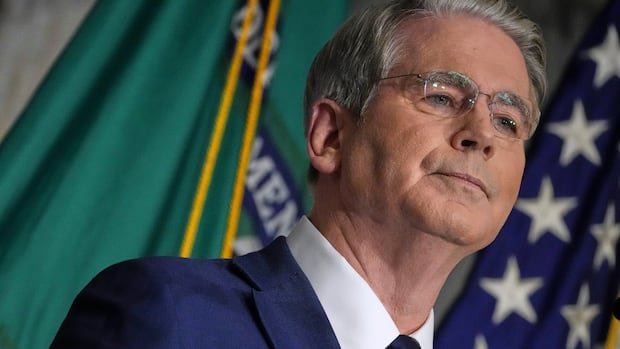
During a press briefing, Treasury Secretary Scott Bessent introduced what he termed an “economic D-Day,” warning countries to cut off business connections with Iran or face the consequences of having key companies and entities excluded from the dollar-based financial system. Bessent emphasized the objective of severing all economic lifelines supporting the Iranian regime.
The U.S. Treasury Department revealed its efforts to disrupt Iran’s financial networks, facilitators, and financial channels used for oil smuggling and circumventing sanctions. Collaborating with U.S. allies, Washington aims to target any sources providing illicit revenue to Iran.
Sanctions have been imposed on five sectors—digital assets, technology, gold, aviation, and shipping—that Iran utilizes to sustain its economy. Nearly 60 entities, individuals, and vessels have been targeted with sanctions. China, a major purchaser of Iranian oil, has faced increased pressure to halt its purchases, although larger Chinese banks facilitating the trade have not been designated yet.
Iran had previously threatened military retaliation and a reduction in Gulf oil exports in response to potential U.S. economic actions. Following the announcement, Iranian Finance and Economic Affairs Minister Ali Madanizadeh asserted Iran’s readiness for U.S. sanctions, warning of a possible economic attack while emphasizing Iran’s defensive capabilities. Brig-Gen. Hossein Mohebbi of Iran’s Revolutionary Guard Corps vowed significant retaliation against U.S. interests and energy chokepoints if Iran’s infrastructure is jeopardized.
The ongoing conflict between the U.S. and Iran has driven global energy prices up. Despite reduced combat activities, diplomatic efforts to resolve the conflict have stalled. Trump’s popularity has declined, with only 33% of Americans approving of his performance according to a recent Reuters/Ipsos poll. The sanctions against Iran have been long-standing, primarily targeting the country’s oil revenues, aviation sector, cryptocurrency activities, weapons procurement, and IRGC-controlled enterprises.
These sanctions restrict designated entities from accessing the dollar-based financial system, although Iran has been agile in establishing new front companies, entities, and vessel registrations to evade these measures.

