
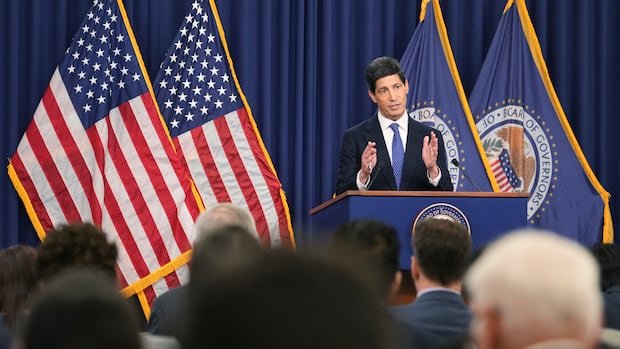
The Federal Reserve implemented its first benchmark interest rate hike since 2023 on Wednesday to combat persistent high inflation, a move that may trigger a strong reaction from the White House. The quarter-point increase elevates the Fed’s key rate to approximately 3.9 percent and is anticipated to lead to increased borrowing expenses for American mortgages, auto loans, and credit cards over time. Additionally, the Fed’s rate-setting committee indicated in its quarterly projections that another rate hike to 4.1 percent is expected later this year.
In a statement, the Fed mentioned that the current policy action aims to facilitate a swifter return to the central bank’s two percent inflation target. The decision comes amid challenges faced by Americans due to soaring prices of essential goods such as groceries, gasoline, and housing, with affordability becoming a prominent issue ahead of the upcoming midterm elections.
During a press conference following the announcement, Fed Chair Kevin Warsh acknowledged the resilience of the job market while acknowledging that inflation has persistently exceeded the Fed’s two percent target for an extended period. This rate hike marks a notable shift for Warsh, who, as the appointee of U.S. President Donald Trump and assuming office in May, previously hinted at the possibility of lowering the key rate, aligning with the president’s stance on reducing borrowing costs.
Despite disruptions caused by the ongoing Iran conflict, leading to a more than seven percent increase in average gas prices within a month, the potential ripple effects across the economy could sustain elevated inflation levels. A recent inflation report showed a slight acceleration in core prices, excluding food and energy, in August.
According to the Fed’s preferred metric, inflation stood at 3.7 percent in July, compared to the previous year. Earlier on the same day, data released by the government revealed a 1.2 percent surge in retail sales in August from the previous month, indicating robust consumer spending levels despite prevailing economic pessimism among Americans. This robust spending suggests that current interest rates may not be adequately curbing economic activity to alleviate inflationary pressures.
As the possibility of further rate hikes looms, with Wall Street projecting a total of three hikes, additional increases expected in December and March, uncertainties persist, especially in light of geopolitical developments. However, strong domestic spending and substantial investments in AI data centers by major tech firms may provide some resilience to the economy.
While the rate hike in the U.S. may not necessarily prompt similar actions by the Bank of Canada in the near term, economists suggest that both countries are grappling with inflationary challenges driven by factors such as rising energy prices. Canada, with inflation holding steady at three percent in August, faces a milder inflation scenario compared to the U.S., which has a higher underlying inflation rate. This differential inflation outlook, coupled with varying economic conditions, indicates that Canada may not face the same urgency to raise rates as the U.S. in the near future.

