
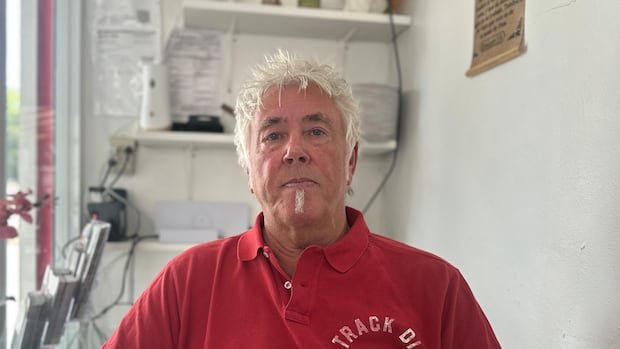
A British man accused of involvement in a scam that depleted a Canadian couple’s retirement funds asserts that he has presented evidence to Mexican authorities demonstrating his innocence in the disappearance of the money. Harry Robinson, 66, is alleged to have collaborated with Jacqueline Herrera Herrera, a Mexican national, to deceive Cindy Thompson and Glenn Brown from Curve Lake, Ontario, into investing $280,000 in a fraudulent real estate deal involving the purchase and resale of seven condos.
Robinson has shared a memo and bank records from HSBC with CBC News, both submitted to the state attorney general’s office of Quintana Roo, indicating that Herrera redirected Thompson and Brown’s money through cashier’s checks and transfers to undisclosed accounts. The memo alleges that Herrera had exclusive control over the account under the name of Xen Investments, their former business venture, and had restricted Robinson from accessing or moving the funds.
Despite Robinson’s claims and the documentation provided, no concrete evidence of the alleged account lock was disclosed to CBC News. The memo urges state investigators to obtain a judicial order to reveal the identities associated with the cashier’s checks and other bank accounts to track the final destination of the funds.
Robinson emphasized the importance of following the money trail in fraud cases, criticizing the lack of effort in tracing the missing funds. However, the focus of the state authorities’ investigation appears to be on establishing fraudulent activities by Herrera and Robinson rather than tracking the movement of Thompson and Brown’s funds post-transfer to Xen Investments.
The case centers on proving deceitful conduct, emphasizing the absence of evidence confirming the promised real estate units’ existence, availability, or allocation. Despite obtaining stays against arrest warrants issued by a state judge, Herrera and Robinson are awaiting the commencement of their criminal proceedings at the state level.
Robinson expressed his frustration with the handling of the case, claiming unfair treatment and asserting his innocence based on his clean background and lack of prior legal issues. Public records reveal Robinson’s background and international work experience, with no sanctions or legal disputes linked to him or his enterprises.
If convicted of fraud by deceit, Robinson could face a prison term ranging from three to twelve years. Seeking assistance from the U.K. Embassy, Robinson is determined to clear his name in the ongoing legal battle.
Thompson labeled Robinson as the intermediary in their dealings, expressing her initial trust in him during the prolonged negotiation period starting in 2024. Robinson, who believed in the legitimacy of the deal orchestrated by Herrera, clarified that he did not invest his own money and was to receive payment through commissions once the deal materialized.
Robinson detailed his interactions with Herrera, highlighting her positive reputation and his belief in her credibility, only to realize later that he was also a victim of deception. Herrera, on the other hand, is seeking to settle the matter by offering to repay a portion of the missing funds through an alternative legal process, blaming Robinson for the remainder.
Herrera’s offer of repayment and Robinson’s alleged responsibility for the remaining sum have left Thompson and Brown contemplating their next steps, uncertain about the potential recovery of their funds.

