
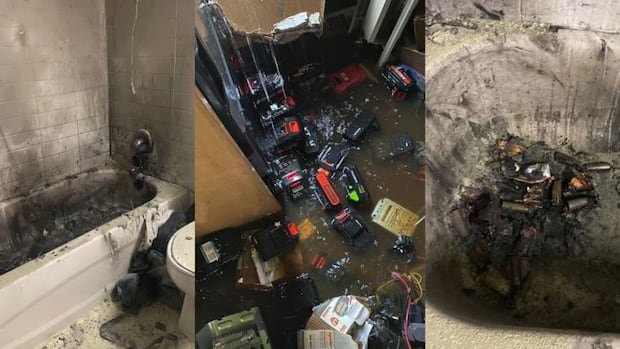
Toronto Fire Chief Jim Jessop highlighted that a room typically takes around five minutes to reach flashover, a critical stage where all contents reach maximum temperature and the entire room becomes engulfed in flames, leaving no chance of survival. However, Jessop emphasized that a lithium-ion battery fire, which has surged by 200% in Toronto since 2022, can escalate to flashover in just 90 seconds. As of August 19, Toronto Fire reported 86 lithium-ion battery fires, compared to 91 incidents in all of 2025.
The increased prevalence of lithium-ion battery fires is concerning due to their rapid escalation and the heightened risks they pose to occupants. These batteries, commonly found in various devices like phones, tablets, vacuums, and power tools, are often involved in fires, particularly in micromobility devices such as e-bikes and e-scooters.
During a recent fire incident on George Street, firefighters discovered six micromobility devices in the unit, underscoring the challenges posed by these batteries. Firefighters are adapting their approaches to handle these fires due to the batteries’ unpredictable behavior, intense heat, and the release of toxic chemicals. The level of charge in the battery significantly impacts the fire’s aggressiveness, with the potential for explosions and projectiles endangering responding crews.
Jessop emphasized the need for regulatory measures at federal and provincial levels to address the risks associated with lithium-ion batteries, urging for standardized safety requirements for batteries sold in the country. Health Canada and the Ontario fire marshal are considering implementing regulations to enhance safety standards for lithium-ion batteries.
Randy Narine, president of Clean Core Research, explained that lithium-ion battery fires result from a gradual buildup of heat leading to gas release and sustained flames, known as thermal runaway. These fires can be triggered by physical or electronic mishandling of batteries, such as pressure exerted on the battery in e-scooters or improper charging methods.
Narine cautioned against the use of non-compliant chargers for e-bike batteries, emphasizing the dangers of overcharging and potential signs of thermal runaway, like white smoke emission. Educating the public on safe charging practices and battery disposal is crucial to mitigate risks associated with lithium-ion battery fires.
As efforts are underway to establish regulatory frameworks for lithium-ion batteries, Jessop stressed the importance of accelerating these measures to enhance public safety and prevent future incidents.

