
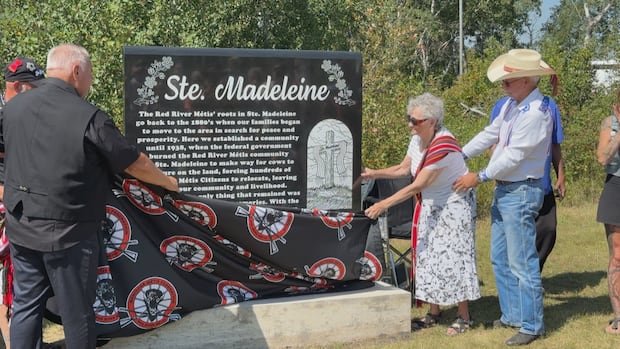
A monument honoring the Métis community’s history in Ste. Madeleine, where residents were displaced in the 1930s, was unveiled in western Manitoba over the weekend. The Manitoba Métis Federation presented a significant plaque during the Ste. Madeleine Métis Days festivities at the historic community near the Manitoba-Saskatchewan border on Saturday.
In the late 1800s, Métis settlers established themselves in Ste. Madeleine after fleeing violence and discrimination following two Métis uprisings in present-day Manitoba and Saskatchewan. The community’s population had grown to around 250 people by the mid-1930s.
Facing failing crops, eroding soil, and the aftermath of severe droughts and the Great Depression, Canadian farmers were abandoning their farms. In response, the federal government initiated a program to convert what it deemed as underutilized land into communal pastures.
Ste. Madeleine was chosen for this initiative. The community was disbanded, and residents were forcibly removed from their homes beginning in 1938. Houses were destroyed, and the community was transformed into pastureland.
MMF President David Chartrand emphasized the significance of the monument, highlighting the 88-year journey since the community’s displacement. He expressed that the monument serves as a clear reminder of the government’s actions in seizing the Red River Métis home.
Barbara Fleury, MMF Culture and Heritage Minister, shared that her late husband’s family descended from the displaced Ste. Madeleine residents. She recounted how her father-in-law was a child when homes in the settlement were burned down, emphasizing the emotional ties to the land and the sense of loss experienced by the community.
MMF Natural Resources and Identity Protection Minister Will Goodon stressed the importance of preserving the memory of Ste. Madeleine’s history. He highlighted the resilience of the community’s descendants, who have upheld the legacy of their ancestors and the connection to their roots.
The descendants had the opportunity to reunite with the land and each other during the event, fostering a sense of continuity and growth for future generations.

