
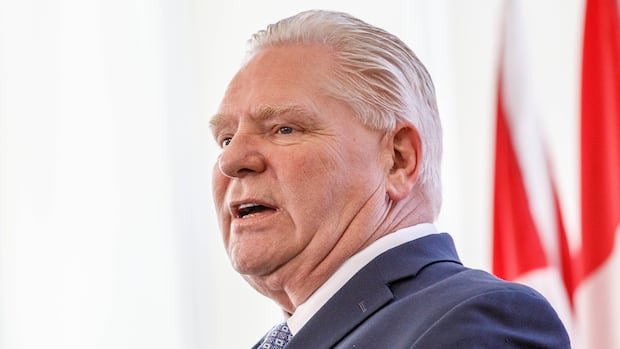
Ontario Premier Doug Ford reiterated his stance against U.S. President Donald Trump, stating that Trump could “kiss my behind” amid escalating tensions between the two leaders. Trump responded by referring to Ford as “Flunky Ford” and insinuating that he is a lesser version of his late brother, Rob Ford.
The insults follow the breakdown of trade talks between Canada and the U.S., leading to a re-escalation of the ongoing trade war. The U.S. imposed 50% tariffs on approximately $28 billion worth of Canadian goods, effective early Saturday, prompting Prime Minister Mark Carney to announce retaliatory tariffs scheduled for September 8.
Ford initially made the controversial remark on a Toronto radio station before reiterating it during a news conference in Hamilton, emphasizing his commitment to safeguarding Ontario workers’ jobs and incomes. Economic Development Minister Vic Fedeli and Finance Minister Peter Bethlenfalvy stood alongside Ford during the press briefing.
In response to Trump’s disparaging remarks, Ford dismissed the U.S. president as a “dictator” and criticized his business track record, likening him to a school bully. Ford also hinted at potential retaliatory actions, including the possibility of cutting off electricity and critical minerals supply to the U.S.
Trump further escalated tensions by announcing via his social media platform, Truth Social, that the U.S. would increase tariffs on Canadian automobiles, car parts, and steel to 50% starting January 1, 2027. Ford expressed his full support for Carney’s decision to walk away from the trade negotiations, a sentiment echoed by other provincial leaders.
Amid calls for urgent action on U.S. tariff relief, opposition parties urged Ford to reconvene the legislature. The Ontario NDP and Liberals demanded swift measures to counter Trump’s tariffs, while the Green Party emphasized the need for bipartisan collaboration to protect Ontario’s economy.
Ford emphasized the need for collective action across all levels of government to navigate the economic challenges posed by the trade war. He called on the federal government for substantial support and regulatory adjustments, including exemptions for tariff-affected sectors and investments in key industries.
Experts like Daniel Tisch from the Ontario Chamber of Commerce emphasized the strategic implementation of retaliatory tariffs and expressed optimism that Canada, with proper collaboration between business and government, can weather the current trade turmoil.
Minister of Canada-U.S. Trade Dominic LeBlanc hinted at forthcoming measures to shield Canadian industries and workers from the trade war’s impact, with further announcements expected in the coming days.

