
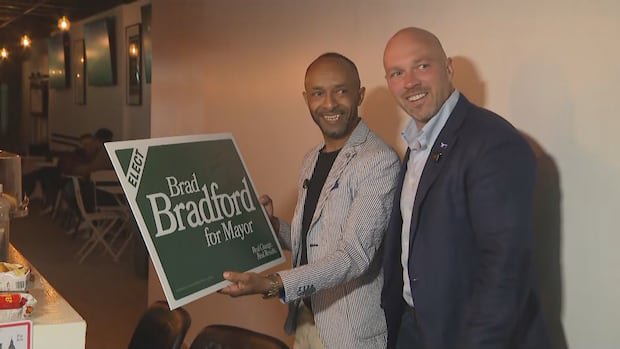
With the Toronto mayoral election approaching in less than a month, Brad Bradford has revealed a series of significant financial commitments totaling hundreds of millions of dollars.
Among the key promises are a proposal to reduce the land transfer tax for the first $1.1 million of all properties, a plan to transition the city’s water services into a new entity, and a strategy to rely more on borrowing. Critics have raised concerns about the feasibility of Bradford’s proposals, labeling them as unfunded commitments.
Incumbent Olivia Chow’s campaign criticized Bradford’s debt strategy, warning about the potential risks of increasing debt levels and the lack of transparency regarding possible service cuts. In contrast, Bradford defends his approach, citing it as a mirrored strategy to how higher levels of government manage budgeting by financing infrastructure projects over extended periods.
Financial accountability expert Peter Weltman highlighted that this shift in financial planning would mark a significant departure from Toronto’s traditional fiscal strategies, emphasizing the need to explore new options for funding infrastructure projects.
Bradford’s campaign asserts that his vision involves a fundamental shift in how municipalities budget and borrow, redirecting funds from long-term savings towards immediate operational costs. This reallocation would enable the city to invest more in daily expenditures while partially replacing lost funding for future projects through borrowing.
The proposed plan would require the city to take on more debt, a departure from the conservative pay-as-you-go approach commonly adopted by Ontario municipalities. Weltman noted that while the initiative could enhance Toronto’s borrowing capacity, it also raises complex considerations related to revenue and financial sustainability.
Critics question the feasibility of Bradford’s financial projections, particularly regarding the establishment of a public utility company to manage water services separately. The campaign anticipates generating profits from this venture, intending to reinvest dividends into other city projects. Bradford also aims to implement a debt allocation strategy similar to that of Prime Minister Mark Carney, emphasizing the potential benefits for enhancing affordability in the city.
As the mayoral race intensifies in its final stretch, Bradford’s focus on financial policies has become a central theme. The timing of these announcements coincides with a perceived slowdown in new policy proposals from the Chow campaign, allowing Bradford to seize the spotlight with his innovative financial strategies.
The upcoming election on October 26 will feature 53 mayoral candidates, with advance voting commencing on October 6.

