
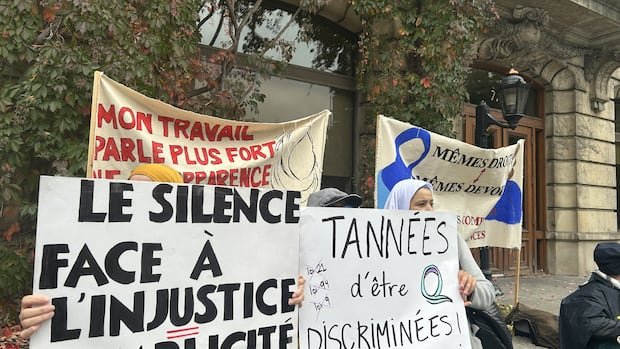
Quebec’s secularism laws have been a subject of contention, with Asma Boumar expressing concern about the growing injustice they breed. Over the past seven years, Quebec has enacted laws like bills 21, 94, and 9, preventing public servants from wearing religious symbols at work. Boumar, who used to wear her hijab while working at a school, suddenly found herself unemployed due to these laws.
In response, Boumar and the group “Québécoises musulmanes tannées” have been protesting outside the premier’s office in Montreal every Monday for the past four months. They feel marginalized and fear further encroachment on their rights as Muslim women by the state.
The upcoming election in Quebec has put a spotlight on these issues, with the Supreme Court expected to rule on the province’s religious symbols law. Different party leaders have varying stances on the matter, with Paul St-Pierre Plamondon of the Parti Québécois supporting the existing laws, while Charles Milliard of the Quebec Liberal Party awaits the court’s decision.
Members of the group, including Mouna Bordji, have faced unemployment and discrimination due to these laws, leading to personal struggles and economic hardship. Their voices have not been heard by the current premier, Christine Fréchette, who has not responded to their requests for a meeting.
The debate over religious symbols, including the hijab, continues to stir controversy, with the far-right National Rally party’s proposal in France sparking discussions. Boumar and her group fear further restrictions and exclusion under Quebec’s secularism laws, emphasizing the importance of state neutrality and respect for individual choices in attire and beliefs.

