
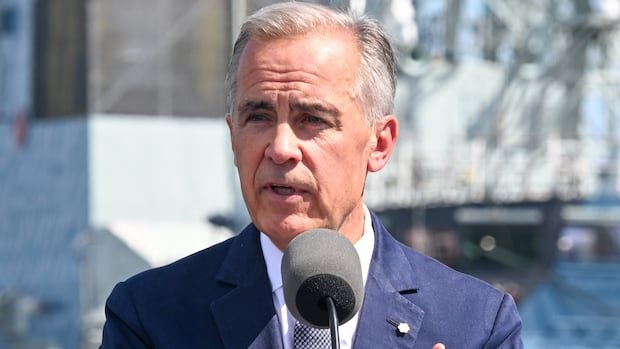
Prime Minister Mark Carney expressed his readiness to resume negotiations with the Trump administration once the U.S. demonstrates a genuine interest in establishing a mutually beneficial economic partnership with Canada, instead of treating it as subordinate. Carney emphasized the importance of a cooperative attitude towards Canadian industries for fruitful negotiations to take place.
Although there is an existing trade agreement between Canada and the U.S. (CUSMA), Carney believes there is room for improvement to benefit all parties involved. However, he emphasized that any progress in the negotiations hinges on the U.S. ceasing its threats to harm Canadian companies and citizens.
Following the introduction of “unfair” and “uneconomic” last-minute changes by the U.S. team during negotiations, Canada decided to walk away from the table. Carney highlighted that the demands put forth by the U.S. would have constrained Canada’s ability to engage in trade agreements with other nations and posed a threat to the French language through reduced subsidies to French-language media and bilingual product labeling requirements.
The U.S. administration’s decision to impose 50 percent tariffs on approximately $28 billion worth of Canadian exports over the weekend further escalated tensions. Carney criticized President Trump’s announcement to increase tariffs on Canadian automobiles, car parts, and steel to 50 percent as a detrimental move that undermines the potential for a constructive trade relationship.
In response to Trump’s threats, Carney reiterated his stance against unfair negotiating terms that aim to weaken key Canadian industries. He highlighted the importance of Canada’s energy exports to the U.S. and emphasized the need for a measured response to safeguard Canadian interests.
During a visit to Lévis, Carney announced substantial funding for Quebec’s shipbuilding industry to construct new icebreakers for the Canadian Coast Guard using Canadian steel. Meanwhile, Ontario Premier Doug Ford suggested imposing a surcharge on electricity exports to the U.S. as a potential retaliatory measure against Trump’s tariffs.
Despite the ongoing tensions, Carney remains committed to exploring positive initiatives while maintaining a firm stance on protecting Canadian interests during trade negotiations with the U.S. The possibility of returning to the negotiation table will be contingent on ensuring fair and equitable terms for both countries.

