
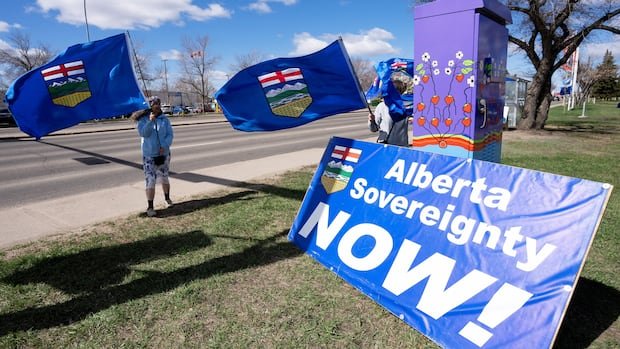
Internal federal documents provide insights into Ottawa’s evaluation of the economic repercussions of Alberta potentially separating from Canada to become an independent nation. Information from Finance Canada and the Justice Department reveals considerations regarding the outcomes of the uncertainty stemming from Alberta’s separatist movement.
Briefing notes from Finance Canada, made public to CBC News through access to information legislation, outline the federal government’s discreet examination of potential scenarios such as an estimated $18 billion fiscal impact, the relocation of corporate headquarters, and a potential mass migration of Albertans to neighboring provinces in the event of Alberta’s secession. The documents also highlight concerns about the adequacy of federal pension laws in addressing the implications of Alberta’s withdrawal from the Canada Pension Plan.
While much of the content in the documents was redacted, they offer a glimpse into the various scenarios under consideration by the government. Dated June 2026, these documents shed light on the upcoming fall analysis.
Alberta’s upcoming October 19 referendum will ask voters whether the province should remain part of Canada or seek independence in the future. Despite polling data indicating a preference for staying within Canada among Albertans, the documents underscore the potential economic repercussions of even the possibility of a separation referendum on both Canada and the province.
Drawing parallels to the 1995 Quebec referendum, the analysis points out that financial markets experienced tightening conditions following that vote, with businesses delaying investment decisions due to uncertainty about future economic arrangements. Referencing historical data from Quebec, the documents suggest that Alberta could witness a similar exodus of corporate headquarters, particularly from non-resource sectors, in the face of lingering uncertainty.
The documents also highlight concerns about a potential outflow of highly educated and skilled workers from Alberta in the event of independence. While Finance Canada was approached for further details, the response from the Privy Council Office emphasized ongoing studies on the economic implications of Alberta’s separation and reiterated the importance of Alberta’s contribution to the prosperity of both Albertans and Canadians.
Additionally, the analysis underscores the significant economic role Alberta plays in the national context, contributing approximately 15% to Canada’s GDP over the last decade and accounting for a substantial portion of the country’s exports, primarily in the energy sector.
University of Calgary economist Trevor Tombe has conducted a similar analysis on the economic impact of separation, emphasizing the potential economic disruption Alberta could face post-independence. Tombe’s report suggests that while Canada would suffer from Alberta’s departure, the province itself would bear the brunt of the economic challenges that may arise.
The analysis also delves into the implications of Alberta’s exit from the Canada Pension Plan, highlighting concerns raised by the plan’s chief actuary about the existing legislation’s flawed formula and potential complications in divesting Alberta’s share of the pension fund’s investments.
As the referendum date approaches, stakeholders continue to analyze the potential outcomes and implications of Alberta’s separatist movement on both the province and the broader Canadian economy.

