
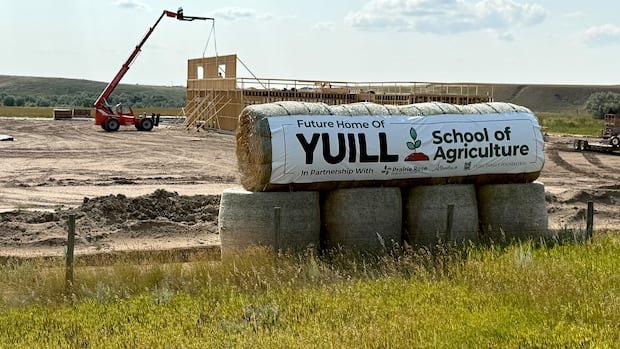
A new barn is being constructed on the outskirts of Medicine Hat with plans to purchase cattle, aiming to support the development of future agricultural producers. Nichole Neubauer, the director of agriculture education at Prairie Rose School Division, describes the initiative as a practical learning opportunity for high school students to engage in farm management hands-on. The Yuill School of Agriculture, situated near Dunmore, Alta., about 10 km southeast of Medicine Hat, is envisioned as a campus for local high school students to receive instruction and college credits across 12 subjects related to food production, farming, and ranching.
The school’s curriculum covers agri-business, technology, food processing, and even activities such as operating U-pick ventures or organizing food tourism events, aligning with the dynamic food production sector. Neubauer, a mixed farm operator near Medicine Hat, transitioned into education after hosting field trips and later played a pivotal role in establishing Prairie Rose’s junior high agricultural programs.
Construction has commenced on the school’s main building at the 30-hectare site donated by local businessman Bill Yuill, which will house labs, classrooms, an equipment shop, and a farmer’s market. Future construction plans include cattle pens, as well as facilities for honey production, egg farming, and greenhouse vegetables. Grade 9 student Willow Munsch, already involved in agriculture through the Irvine School Agricultural Discovery Centre, looks forward to enrolling at Yuill School when classes commence next year.
While most students are expected to have a farming background, Neubauer emphasizes the need for producers to adapt to the changing industry landscape and the growing demand for skilled workers. According to the Alberta Ag for Life program, the agriculture sector in Alberta employs approximately 79,000 individuals, with projections indicating a potential shortage of 19,000 trained workers by 2030.
Bill Yuill, a prominent local figure who contributed land and $600,000 towards the project, expressed optimism about the school’s potential impact on the community. Fundraising efforts, including a gala dinner and donations from ranching families and agricultural firms, have raised a total of $900,000. Combined with provincial funding and division resources, the school’s initial $4.5-million budget has been secured.
The Yuill School of Agriculture will join the ranks of 28 collegiates in Alberta, offering specialized classes tied to post-secondary institutions and granting program credits to students pursuing higher education. Prairie Rose already operates a collegiate program in flight training, and similar partnerships with agricultural schools like Olds College and Lethbridge Polytechnic are emerging. Neubauer stresses the importance of educating students about the diverse career opportunities in agriculture and the critical role of the industry in feeding the population and sustaining the environment.

