
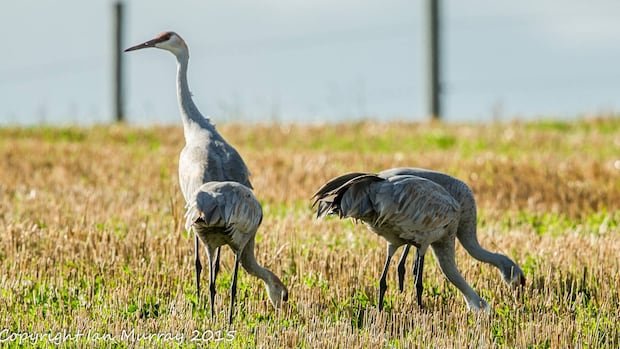
For the first time in history, sandhill cranes will be allowed to be hunted in specific regions of Quebec and northern Ontario. In Quebec, the hunting season will span 14 days, running from September 12 to September 25, and will be limited to farmland in Abitibi-Témiscamingue and Saguenay–Lac-Saint-Jean. These regions were selected following a comprehensive assessment conducted by the Canadian Wildlife Service for Environment and Climate Change Canada (ECCC) over nearly a decade to evaluate the species’ status and growth.
Mathieu Tétreault, a game bird biologist with the Canadian Wildlife Service, mentioned that the assessment was triggered by concerns raised by agricultural unions about the crop damage caused by the birds. Hunting organizations also showed interest in the opportunity to hunt a new game. After eight years of evaluation, the team determined that a controlled harvest of the sandhill crane would be sustainable in both provinces.
The sandhill crane population has flourished, with numbers increasing from around 30,000 to over 100,000 birds in two decades. While the species faced extinction a century ago due to unsustainable hunting, Kyle Elliott, an ornithology professor at McGill University, expressed confidence that history would not repeat itself given the strict regulations imposed by the government for the fall season.
Hunters possessing migratory bird and small game permits will be permitted to hunt one sandhill crane per day and can only have one in their possession at a time, requiring them to consume the bird before shooting another. Environment and Climate Change Canada has developed a visual aid to assist in distinguishing sandhill cranes from other bird species to prevent unintended targeting.
The harvest is not expected to significantly reduce the crane population to prevent agricultural damage but is aimed at providing recreational opportunities for hunters, as cranes are recognized for their culinary value. Farmers, such as Wallace Metcalfe, president of the Union des producteurs agricoles for Témiscamingue, remain hopeful despite the restrictions, citing instances where farmers have had to replant fields due to sandhill crane activities. Farmers can also request a Damage and Danger permit outside the hunting season to manage crane-related disruptions, with permit holders required to report the number of cranes culled.
Data from 2024 revealed that eight permits were issued in Quebec, resulting in the harvesting of eight cranes. Wallace noted that some individuals in the region had the chance to sample crane meat, describing it as the “champagne of birds.” Hunters are anticipating the upcoming season, with Marc Renaud, the general manager of the Fédération québécoise des chasseurs et pêcheurs, expecting widespread participation from across the province.
While the hunt is currently restricted to two Quebec regions, Tétreault mentioned that the Canadian Wildlife Service will review the season after four years, as is customary for new hunts. He hinted at the possibility of expansion in the future based on the sustainability of the harvest season and potential population growth in other areas.

