
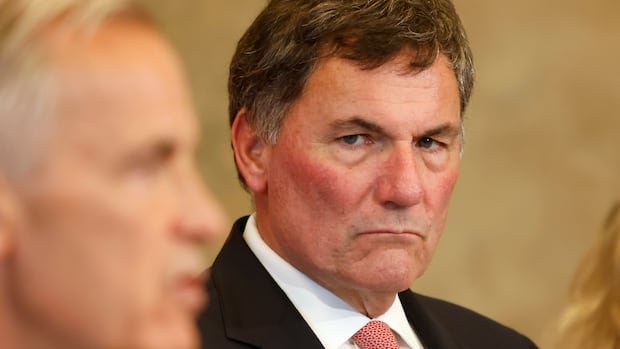
Canada’s Trade Minister, Dominic LeBlanc, expressed satisfaction with the United States’ decision to retract its stance on French language and culture issues following remarks made by U.S. Trade Representative Jamieson Greer to CBC News. LeBlanc stated that the U.S. has withdrawn its positions on discoverability and labeling, assuring that measures supporting French language and Canadian culture will not face future U.S. trade actions. LeBlanc anticipated further positive clarifications from the U.S. to potentially facilitate a mutually beneficial trade agreement respecting Canadian sovereignty.
Prime Minister Mark Carney instructed negotiators to cease discussions after the Trump administration raised concerns about culture, automobiles, and sovereignty. Carney criticized the U.S. for objecting to Canadian subsidies for French culture, the presence of French-language media online, and the requirement for bilingual product labels in Canada.
In an interview with CBC News, U.S. Trade Representative Jamieson Greer adjusted the U.S. position on culture and language, emphasizing the importance of the French language in Canada and acknowledging its sensitivity. Greer clarified that despite highlighting French content discoverability on streaming services, it was not a dealbreaker for the U.S. He emphasized that the issue was not a red line for the U.S. and underscored the significance of respecting French-language protections.
Following the breakdown of negotiations, the U.S. imposed 50% tariffs on numerous Canadian goods, prompting Canada to announce counter-tariffs on over 700 U.S. imports. Although the U.S. modified its position on language and culture, Greer noted that talks had stalled, with no immediate prospects for resuming negotiations. Greer confirmed a lack of communication with LeBlanc and highlighted the need for further discussions to move forward.
U.S. Commerce Secretary Howard Lutnick accused Carney of politicizing the situation by walking away from negotiations, denying that discussions focused on French language issues. Lutnick dismissed the relevance of Quebec’s language laws to the U.S. and criticized Carney’s actions as a strategic move ahead of the Quebec election. The differing perspectives on the negotiations underscored tensions between federal and provincial stakeholders.
As the trade dispute unfolds, the future of Canada-U.S. relations remains uncertain, with both sides facing challenges in resolving key issues to reach a mutually acceptable trade agreement. The divergent narratives surrounding the negotiations highlight the complexities involved in balancing economic interests and cultural considerations in international trade discussions.

