
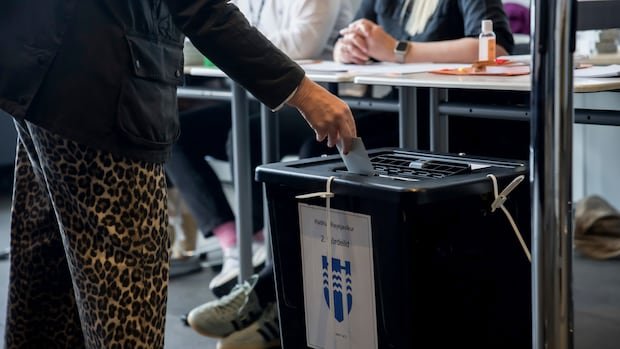
Voters in Iceland participated in a referendum on Saturday to determine if the country should restart discussions to join the European Union, amid concerns over U.S. President Donald Trump’s interest in Greenland. The referendum posed a straightforward question to approximately 265,000 eligible voters: Should Iceland resume negotiations with the EU for membership?
A positive vote would initiate talks with the European Commission on 35 different areas, ranging from the economy to human rights. Proponents believe that EU membership could offer safeguards if Iceland faced similar threats from Trump and foresee economic stability by joining the union. Conversely, if the proposal is rejected, Iceland would not revisit the issue for at least a generation. Opponents argue that EU membership could jeopardize Iceland’s valuable fishing industry and assert that the country already benefits from being part of the EU’s single market and the Schengen area.
Anticipating a tight outcome, experts noted that over 20% of voters had already cast early ballots before the referendum day, according to Iceland’s national broadcaster RÚV.
Trump’s remarks about U.S. control of Greenland, which is in close proximity to Iceland, sparked concern in the country. Trump’s repeated references to Iceland while discussing Greenland’s fate heightened worries among some Icelanders. While Trump has indicated no intention of using force to claim Greenland, his interest in the territory remains a point of concern.
The Icelandic government, led by a left-leaning coalition since 2024, proceeded with the EU referendum earlier than planned due to the perceived need for a safeguard against potential U.S. actions. Some citizens, like horror fiction writer Hildur Knútsdóttir, express a lack of trust in the U.S. and favor EU membership.
Debates on EU membership in Iceland are not new, with a previous attempt to join the bloc ending in 2015 primarily due to concerns about the impact on the country’s fishing industry. The fishing sector, crucial to Iceland’s economy and cultural heritage, has been a focal point in discussions leading up to the referendum. Joining the EU would require Iceland to adhere to the common fisheries policy, potentially granting access to foreign trawlers in Icelandic waters. The government has suggested seeking a special arrangement or opting out entirely from the policy.
As the referendum approached, Prime Minister Kristrún Frostadóttir emphasized to voters that the decision was not final, and another referendum would follow if Iceland reached a membership agreement with the EU.
For many Icelanders, the vote holds significance beyond economic considerations, impacting the nation’s identity and culture. Iceland, known for its history of standing up to larger European nations, including winning the Cod Wars with Britain in the 1970s, faces a critical decision. Proponents of EU membership argue that closer ties with European neighbors are essential to tackle global challenges like climate change. They also believe that adopting the euro would provide more stability compared to Iceland’s volatile currency, the króna. On the other hand, opponents contend that Iceland already benefits from European integration without compromising its sovereignty, highlighting more favorable trade agreements as evidence.
Former Prime Minister Katrín Jakobsdóttir expressed her belief that Iceland is better off maintaining its current relationship with the EU while staying outside the union.

