
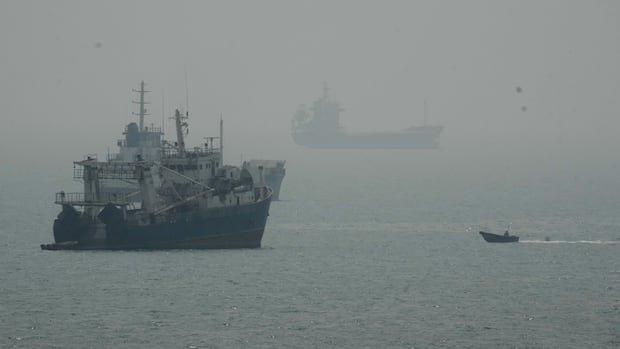
An Iranian cargo ship was attacked in the vicinity of Qeshm Island in the Strait of Hormuz, as reported by Iranian state media on Sunday. Tehran’s plan to inform neighboring countries about its disputed efforts to regulate shipping in the strait was delayed as a result.
The incident, resulting in one fatality and four injuries according to the reports, refocused attention on the strait after recent escalated threats to shipping in the region. Last week, Iran-backed Houthi rebels took control of an island in the Bab al-Mandab Strait in the Red Sea.
The Qeshm governor, quoted by Iran’s state-run IRNA news agency, attributed Sunday’s attack to a “terrorist enemy.” The U.S. military, which has previously targeted Iranian-flagged vessels during port blockades, had no immediate response to the incident. This comes amid a new threat posed by Iranian ballistic missiles directed at American warships.
Qeshm Island, located approximately 22 kilometers from the city of Bandar Abbas, plays a crucial role in Iran’s efforts to assert dominance over the Strait of Hormuz.
Just before the attack, Iran’s leadership maintained a defiant stance. President Masoud Pezeshkian declared on social media, “Our people won’t be intimidated. Iran will not yield.”
Contrary to Iran’s stance, U.S. President Donald Trump suggested that Iran is eager to negotiate a deal. Trump made these remarks at a golf course in Doonbeg, Ireland, where he was attending a tournament.
Iran had planned for foreign ministers from regional countries to convene in Oman on Monday to discuss joint shipping management efforts with Oman across the strait. However, Oman’s Foreign Minister, Badr Albusaidi, announced the postponement of the meeting citing the need for consensus among all parties.
Commercial ship traffic in the Strait of Hormuz remains limited amid ongoing attacks, which have disrupted what was once considered an international waterway. The United Kingdom Maritime Trade Operations monitor reported an incident where a vessel was hit by a projectile while passing through the strait.
The U.S. has ensured the flow of oil by guiding ships along Oman’s coast, despite the potential risks involved. Before the postponement, only Iraq had confirmed its attendance at the Oman meeting, with Bahrain opting out due to strained diplomatic relations with Tehran.
Iran’s proposal for ships to pay transit fees has been a point of interest since the early stages of the conflict. The country aims to route incoming traffic through its waters while outgoing vessels would traverse a mix of Iranian and Omani waters.
The anticipated meeting in Oman raised hopes for Gulf nations to present a united front against the conflict. They have endured Iranian attacks targeting U.S. military assets on their territories without being involved in initiating the war.
Over the weekend, Iran’s president disclosed positive discussions with a senior official from the United Arab Emirates during a global summit of developing nations. The ongoing conflict has seen Iran launching numerous missiles and drones at the Gulf country, a key ally of the U.S.
Pezeshkian mentioned a meeting with Abu Dhabi’s crown prince, Sheikh Khaled bin Mohamed bin Zayed, during his participation in the BRICs summit in New Delhi. He expressed the need to address mutual concerns and foster a cooperative future during the live broadcast on Iranian state television.

