
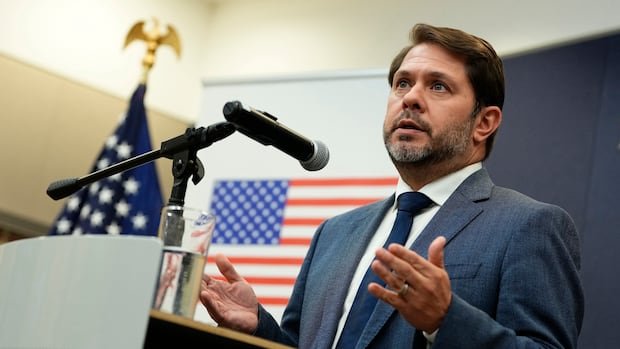
In the ongoing trade dispute between Canada and the United States, some Democratic officials believe that a strong performance by their party in the upcoming U.S. midterm elections in November could impact the situation. Arizona Senator Ruben Gallego expressed his view during an interview on the show “Rosemary Barton Live” that aired over the weekend. He emphasized that such tariffs, particularly on goods from Canada, are essentially taxes that are unnecessary and not favored by Americans.
The current control of the White House and both houses of Congress by Republicans has allowed President Donald Trump to pursue his tariff policies. Despite some concerns among politicians about potential repercussions on their re-election prospects, the party has largely supported Trump’s tariff agenda. Gallego argued that the tariffs imposed by Trump are not achieving their intended goal of revitalizing U.S. industry and instead are straining relations with key allies who have historically supported the country.
Gallego also expressed concerns about the impact of the tariffs on the aerospace manufacturing sector in his state, which relies on Canadian steel and aluminum subject to the tariffs. A recent report from TD Bank highlighted a slight rebound in U.S. manufacturing but cautioned that factors such as higher energy costs, tariff-related pressures, and financial constraints could limit the expansion of the sector.
Maine Governor Janet Mills shared her perspective in a separate interview, suggesting that a Democratic victory in both chambers of Congress could challenge the president’s authority over taxation and tariffs. Despite Trump’s utilization of Section 338 of the Tariff Act of 1930 to implement the latest round of tariffs, there are efforts by some members of Congress to repeal this provision due to the lack of oversight.
Mills noted a growing anti-Trump sentiment in the U.S. related to the economy, which could influence the president’s decisions regarding trade policies. Trump, on the other hand, expressed optimism about reaching a trade deal with Canada soon, emphasizing his concerns about perceived discrimination against U.S. dairy farmers.
The escalating trade tensions have led to retaliatory measures, with Canada imposing tariffs on a range of American goods. While relations may be strained, recent gestures of goodwill, such as Trade Minister Dominic LeBlanc’s condolences to U.S. Commerce Secretary Howard Lutnick, suggest efforts to maintain communication channels.
Gallego emphasized the importance of diplomatic efforts to de-escalate the trade tensions between the two countries, urging both sides to engage in meaningful negotiations. Governor Mills echoed the sentiment, calling for dialogue and the involvement of a neutral mediator to address the damaging impact of the tariff disputes on both economies.

