
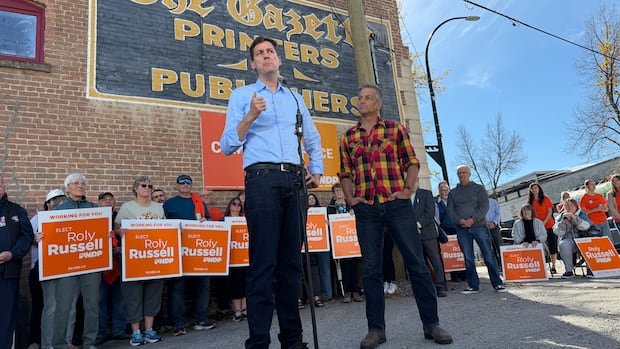
During a series of campaign events in the British Columbia Interior on Sunday, David Eby addressed questions about the focus of the NDP re-election campaign. Eby emphasized that the campaign’s emphasis was on addressing the priorities of British Columbians and representing issues that are important to families.
Throughout a three-day tour of 10 electoral districts in the Kootenays, Okanagan, and Vancouver Island, Eby outlined a clear campaign strategy beyond the initial reasons for calling a snap election. Prior to announcing a new tax bracket for individuals earning over a million dollars annually on Sunday evening, the campaign highlighted class divisions.
Initially, Eby referenced Donald Trump numerous times in his early speeches, emphasizing the need for certainty in trade and questioning the positions of Conservative MLAs. However, as the campaign progressed through stops in Grand Forks, Nelson, Castlegar, and Vernon, the focus shifted towards who the NDP would advocate for versus who the Conservatives might not support, particularly concerning developers, oil and gas companies, and grocery chains.
Eby unveiled several policy announcements, including expanding the vacancy and speculation tax, implementing a new tax on unsold units in new condos, temporarily reducing fuel tax by 10 cents, and introducing regulations on gas and grocery prices. These initiatives were contingent upon an NDP re-election.
The campaign aimed to energize core supporters for the snap election, providing a rallying point in a race that lacked widespread enthusiasm among voters. Despite potential criticism that the campaign message could alienate businesses and affluent individuals, Eby reiterated that the focus was on unity and standing up for a collective cause.
As the campaign entered its final weeks, Eby’s distinct approach of standing up for certain issues rather than engaging in direct confrontation was expected to remain a central theme.

