
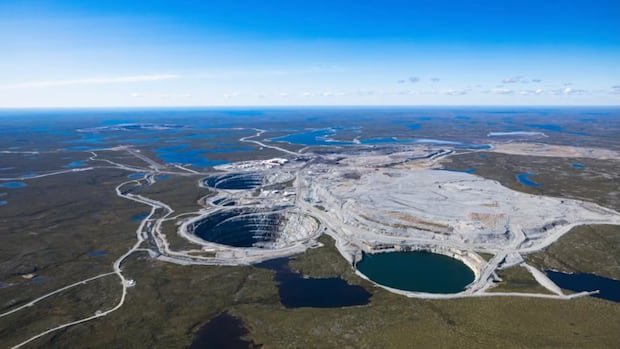
The Northwest Territories (N.W.T.) and federal governments have initiated discussions regarding the potential closure of the Independent Environmental Monitoring Agency (IEMA), a regulatory body overseeing activities at the Ekati diamond mine for around 30 years.
In a recent communication to IEMA, the N.W.T. environment minister and the federal minister of northern affairs have started gathering feedback from stakeholders on the proposed termination of the environmental agreement that established IEMA. Following the conclusion of the Ekati agreement, IEMA may be disbanded.
The Ekati mine ceased operations earlier this year after the Arctic Canadian Diamond Company entered receivership. With no new operator taking over, the mine has become a public responsibility, with the N.W.T. government overseeing remediation efforts managed by PricewaterhouseCoopers.
Utilizing the $326-million reclamation security fund left by the previous operator, the government is covering closure expenses, including IEMA’s funding. Financial constraints are cited as the primary reason for considering reallocating funds from the oversight board to reclamation activities.
Apart from seeking IEMA’s input on the proposal, the governments are also consulting Indigenous governments and organizations, such as the Tłı̨chǫ government, Yellowknives Dene First Nation, Łutsel K’e Dene First Nation, North Slave Métis Alliance, and Kitikmeot Inuit Association.
IEMA’s executive director, Mark Casas, argues against dissolving the oversight board, emphasizing its crucial role in preventing costly errors during the complex reclamation process at the site, which includes ten open pits.
Casas highlights the importance of IEMA’s expertise accumulated over three decades, emphasizing the challenge of re-establishing such knowledge once lost. He stresses the cost-effectiveness of IEMA’s insights compared to hiring external consultants for similar information.
Notably, there is no approved closure plan for the mine following its sudden shutdown, necessitating review and approval by the Wekʼèezhìı Land and Water Board. Casas warns that shutting down IEMA would eliminate vital technical review input for the closure plan, with the government now solely overseeing the site.
Eileen Marlowe of the Łútsël K’é Dene First Nation (LKDFN) sees an opportunity in the debate over IEMA’s future for Indigenous groups to take a more active role in mine cleanup efforts. She advocates for Indigenous involvement in shaping environmental policies and procedures, aiming for a more inclusive approach.
In a related move, N.W.T. Environment Minister Jay Macdonald has directed the closure of the board overseeing the Diavik diamond mine by March 2027, with mine owner Rio Tinto mandated to establish a $150,000 fund for Indigenous-led traditional knowledge monitoring at the site over three years.

