
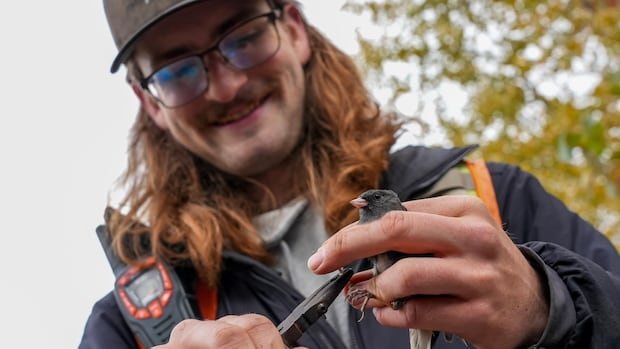
In the midst of a boreal forest surrounded by interconnected nets, Ethan Denton carefully retrieves a small, dark-eyed junco from a cloth bag. Denton, an ornithologist from Calgary conducting research in Fort McMurray, Alberta, proceeds to affix a light aluminum band with an identification number onto the bird’s right leg using pliers. After recording the bird’s gender and measurements, he releases it, contributing to a collaborative effort among researchers in North America to track migration patterns.
Ken Foster, a co-founder of the Wood Buffalo Wildlife Research Institute (WBWRI), observes as Denton instructs volunteers on the tagging process. The WBWRI, a non-profit organization unique to Fort McMurray, focuses on long-term monitoring of bird populations in the oilsands region. Foster emphasizes the importance of such programs in identifying and addressing declines in bird populations.
While bird research in the oilsands area is not new, the WBWRI aims to provide stability and engage volunteers in wildlife research. Foster, along with his wife Christine Godwin, established the non-profit in 2024 to continue their long-term research and promote citizen science initiatives.
Data collected by Foster through his consulting company, Owl Moon Environmental Inc., indicates varying responses of bird species to environmental changes in the oilsands region. Some songbird populations, like the least flycatcher and northern waterthrush, have plummeted by up to 90% over the past 15 years due to habitat alterations caused by wildfires and industrial activities disrupting migration routes and food sources.
Foster highlights the thriving populations of adaptable species like clay-colored sparrows in disturbed habitats reclaimed from former oilsands sites or areas regenerated after wildfires. Energy companies have shown interest in Foster’s research, aligning with the WBWRI’s goal of fostering research projects that also promote education and outreach.
Collaborative efforts between local studies and initiatives like the WBWRI are crucial in monitoring changes in bird populations. By integrating local data with national databases, researchers can pinpoint specific issues and inform relevant stakeholders. Erin Bayne, a biology professor at the University of Alberta, emphasizes the importance of data integration in addressing local conservation concerns.
In addition to bird banding projects, the WBWRI has introduced automated tracking towers to monitor animals fitted with radio transmitters as part of the Motus Wildlife Tracking System. Foster envisions expanding these efforts to include tagging birds with radio transmitters, monitoring bat populations, and training volunteers in wildlife rehabilitation.
Foster reiterates the significance of programs like the WBWRI in quantifying the changes observed in bird populations and emphasizes the collective effort to address declining bird numbers.

