
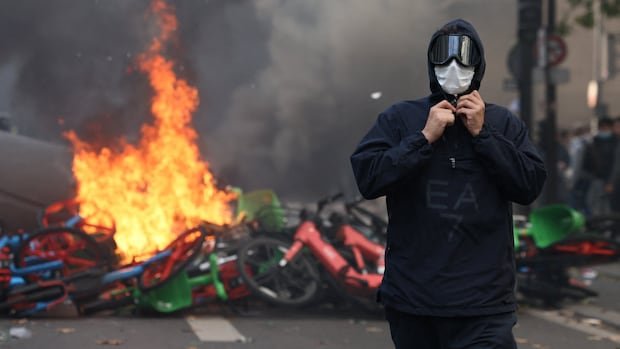
France is bracing for a challenging aftermath following a tumultuous day of protests that united high schoolers, trade unions, and “yellow vest” demonstrators in Paris, Lille, and other cities. The protests, marked by both peaceful demonstrations and violent clashes, resulted in parts of Paris resembling a war zone.
During the protests, there were intense confrontations between protesters in black attire hurling bricks and law enforcement using water cannons and tear gas. The clashes led to arrests, with an estimated 110,000 demonstrators in Paris and scenes of looted businesses and vandalized streets.
The repercussions of the violence are expected to linger, leaving a lasting impact on the city. The protests have evolved from initial demands for improved school facilities to a broader ideological battle over French values and government priorities.
The involvement of the “yellow vest” movement adds complexity to the situation, potentially extending the protests beyond student grievances. Political leaders have condemned the violence and emphasized the distinction between peaceful demonstrators and instigators of chaos.
The protests shed light on deep-rooted issues including fiscal challenges, class disparities, systemic racism, and the use of state force. Students’ demands for better education conditions and government accountability have resonated across diverse communities, highlighting longstanding neglect in marginalized areas.
As the Macron government grapples with mounting pressure, the clash of priorities has led to a forceful law enforcement response and heightened political tensions. With the upcoming presidential election looming, the country faces a critical juncture where the far right is gaining traction, posing concerns for the safety and future of the protesting students.

