
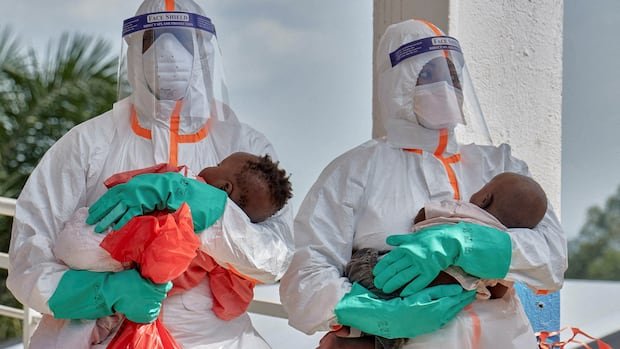
Outside a facility treating Ebola in the northeastern part of the Democratic Republic of Congo, Neema Nyaloka cradles a baby in her arms, a survivor of the disease herself. She is now assisting UNICEF in caring for numerous children separated from their sick parents. UNICEF has set up 12 child-care centers near Ebola treatment facilities, where some children are waiting for their parents to recover, while others have been orphaned due to the virus.
According to Lucia Elmi, the director of global emergency programs at UNICEF, an estimated 1,900 children have been separated from their families because of Ebola. This situation underscores the heavy toll the outbreak is taking on children, with the current outbreak being the largest and deadliest in the country’s history, spreading across seven provinces.
As of the latest figures from the D.R.C.’s public health institute on Oct. 15, there have been over 9,200 confirmed cases and more than 4,400 deaths. Children account for just over a quarter of those fatalities, with a higher fatality rate of 60 percent compared to adults’ 40 percent, as per the World Health Organization.
Amy Mina, a project leader from Save the Children, highlights the significant impact of Ebola on children, especially those under five years old. The region’s children already face challenges such as malnutrition and displacement due to ongoing conflicts, with the Ituri province being the hardest hit region by the outbreak.
Save the Children is working to support schools and communities by providing supplies and training to recognize Ebola symptoms, although attendance has dropped due to parents’ fears of transmission. The fear of Ebola is also causing parents to avoid seeking medical treatment for their children for other health issues, leading to additional preventable deaths.
In addition to the Ebola crisis, there has been a rise in cholera cases in the western part of the country, further straining the healthcare system. When children contract Ebola, they must be isolated, adding emotional stress due to the separation from their families.
The fractured response to the outbreak has led to pregnant women avoiding clinics, resulting in a rise in maternal deaths. Most Ebola-related deaths occur outside treatment centers, making it challenging for medical workers to track and contain the spread of the virus. The lack of resources, including the closure of USAID, has hampered early detection and response efforts, contributing to the severity of the outbreak.
The current outbreak is caused by the rare Bundibugyo strain of Ebola, for which there is no approved treatment or vaccine. The situation is only second to the 2014-2016 outbreak in Guinea, Liberia, and Sierra Leone in terms of fatalities. The outbreak has also impacted neighboring countries like Uganda and Kenya, with cases linked to the Congo outbreak.
Aid groups stress the urgent need for more treatment centers, funding, and education to address the health crisis in the Democratic Republic of Congo. Building trust and awareness among the population is crucial in combating the outbreak effectively.
Healthcare workers on the frontlines continue their battle to save lives, facing challenges of mistrust, fear, and lack of awareness among the affected communities.

