
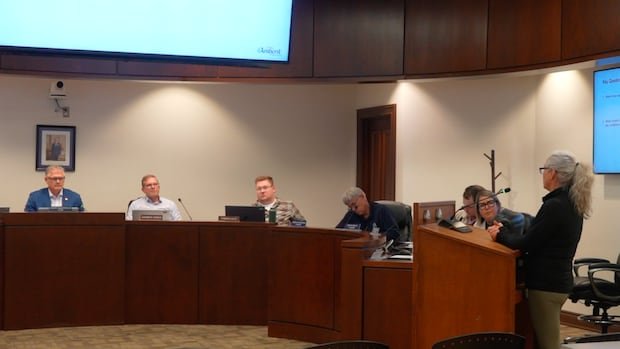
The Town of Amherst is currently exploring potential locations for new emergency shelters and supervised consumption sites within the town. Seeking input from the public, town staff discussed the definitions associated with these facilities and where they could be allowed in the future.
During the meeting, Jason MacDonald, the chief administrative officer of Amherst, informed council members and attendees that there are currently no pending applications for a supervised consumption site or new emergency shelter. Supervised consumption sites are facilities designed to provide a safe environment for individuals to use controlled substances, aiming to reduce overdose fatalities, and require federal authorization.
One resident, Tina Gibson, expressed opposition to locating either an emergency shelter or supervised consumption site in downtown Amherst, citing concerns about the potential negative impact on the area. However, under the Municipal Government Act, the town cannot outright prohibit these land uses.
In terms of proximity to services, Nova Scotia Health emphasized that supervised consumption sites should be situated near other health-care facilities, while Public Health supported the idea of shelters being close to essential services. The town currently hosts one emergency shelter managed by the Cumberland Homelessness and Housing Support Association, which would be allowed to remain on Prince Arthur Street even if zoning regulations change.
Addressing the debate surrounding the shelter’s location, there have been conflicting petitions presented to the council. One petition, signed by 337 individuals from both the town and the county, advocates for relocating the shelter due to concerns about increased drug use and discarded paraphernalia in public spaces. On the other hand, a counter-petition with 288 signatures, also from residents of the town and the county, supports maintaining the shelter in its current downtown location.
Sophie Mack, one of the organizers of the pro-downtown petition, emphasized the need for community collaboration to find solutions. She highlighted the importance of new support services, such as supervised injection sites, being easily accessible to existing resources to encourage usage and support those in need.
The Amherst planning advisory committee is expected to propose recommendations on potential zoning adjustments, with a public hearing scheduled following the initial reading by the town council.

