
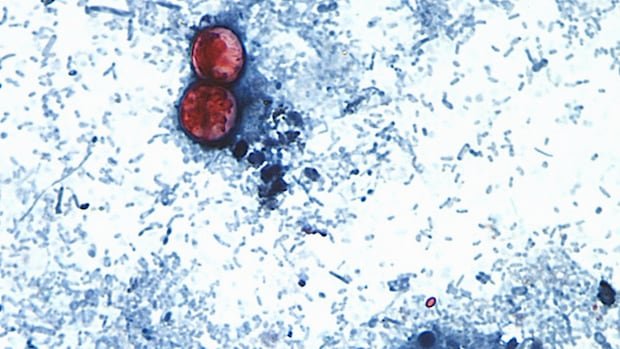
The most extensive cyclospora food poisoning outbreak in U.S. history has been declared over by U.S. health authorities on Friday. Officials from the U.S. Food and Drug Administration have expressed confidence that all the recalled iceberg lettuce associated with this particular outbreak has been removed from the market. This outbreak, which affected nearly 13,000 reported cyclospora cases across multiple states, did not have any known Canadian cases linked to it.
Despite the end of the outbreak, there are lingering questions regarding its origin. The parasite responsible for cyclospora is transmitted through human feces, and it remains unclear how sewage could have contaminated enough food to cause illness in so many individuals. Ellen Shumaker, the director of outreach for Safe Plates, a food safety program at North Carolina State University, explained that contamination can occur when produce is grown in contaminated soil or comes into contact with polluted water.
Since May 1, the government has received reports of almost 20,000 lab-confirmed cases, a stark increase compared to the same period last year. Additionally, over 6,100 suspected cases have been reported. The previous worst year for cyclospora infections in the U.S. was in 2019 when around 4,700 illnesses were reported nationally.
Cyclospora is a tiny, round parasite that typically causes watery diarrhea with frequent and sometimes explosive bowel movements, as described by the CDC. Outbreaks usually occur more frequently in late spring and summer. Cyclosporiasis, the illness caused by cyclospora, is less common than foodborne illnesses caused by other pathogens like salmonella and E. coli. Many cases are not directly linked to a specific food or source.
The surge in cases this year was mainly driven by an outbreak in 21 states associated with iceberg lettuce. However, there are numerous other cases that have not been connected to this specific outbreak. Michigan was the state most heavily impacted, reporting the highest number of cases and the only two U.S. deaths related to the outbreak.
During the outbreak investigation, initial focus was on lettuce served at Taco Bell, but federal officials later pinpointed Taylor Farms as the source of the contaminated lettuce. The company subsequently recalled iceberg lettuce grown in central Mexico. The recall by Taylor Farms encompassed numerous packaged salad products containing iceberg lettuce mixed with other vegetables, which were distributed to prominent U.S. restaurant chains such as Yum Brands, the parent company of Taco Bell, Pizza Hut, and KFC.
The FDA announced the conclusion of on-site inspections and sample collection at iceberg lettuce growers and the processing facility in Mexico. Samples obtained during the inspections are currently undergoing analysis. The outbreak has drawn attention to a growing concern: U.S. regulatory agencies are reducing international inspections, potentially allowing contaminated produce to reach American consumers without detection.

