
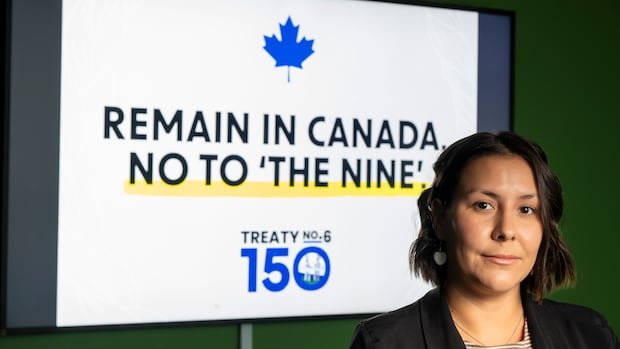
Angel Houle, who had never participated in an Alberta provincial election before, is actively involved in the upcoming referendum this month. She is not only casting her vote but also assisting First Nations leaders in preparing for the voting process on Oct. 19. This referendum will determine whether Alberta should remain part of Canada or proceed with a second, binding referendum on separation. Houle, working at the Confederacy of Treaty Six First Nations, has been coordinating workshops to help member nations establish teams to inform people about voting procedures and locations. She emphasized the importance of preserving a united Canada and upholding the treaties and agreements that uphold that unity, stating that the referendum’s outcomes are crucial for treaty people, nations, and future generations.
There has been a noticeable increase in community members seeking more information about the referendum, indicating a desire to participate and have their voices heard. Various groups, including First Nations people on both sides of the debate, are actively spreading awareness and garnering support for the upcoming vote. Albertans will be voting on ten questions, with nine focusing on immigration and constitutional matters, and the final question addressing separation. This campaign has revealed divisions and led to a legal dispute between First Nations and Premier Danielle Smith’s United Conservative Party government. Despite Smith’s claims that First Nations remain valued partners, leaders express concerns about the lack of consideration given to their people, land, and treaties in the separation discourse.
To ensure a smooth voting process, efforts are being made to address challenges such as providing necessary identification, transportation to polling stations, and overcoming language barriers. First Nations groups are translating the questions for non-English speakers and planning to have chiefs and officials present at polling stations to assist with verifying voter eligibility. Additionally, outreach activities are being conducted for off-reserve members. The demand for voting has been exceptionally high, with Elections Alberta sending out over 652,000 mail-in ballots. The agency anticipates an 85% turnout for the referendum, surpassing the record set in Alberta’s 1935 general election.
Several First Nations leaders have voiced their opposition to separation, highlighting the division caused by the referendum. A coalition of First Nations initiated a legal challenge, arguing that the petition for a separation vote was invalid due to the lack of consultation with First Nations. Although a court ruled in favor of the First Nations, the government announced its intention to appeal, leading to uncertainty over the lawsuit’s status. Despite the challenges, leaders like Tsuut’ina Nation Head Chief Ellery Starlight emphasize the importance of unity, urging all Albertans to vote in favor of maintaining cohesion. The mobilization efforts among First Nations communities indicate a strong commitment to influencing the referendum’s outcome positively.

