
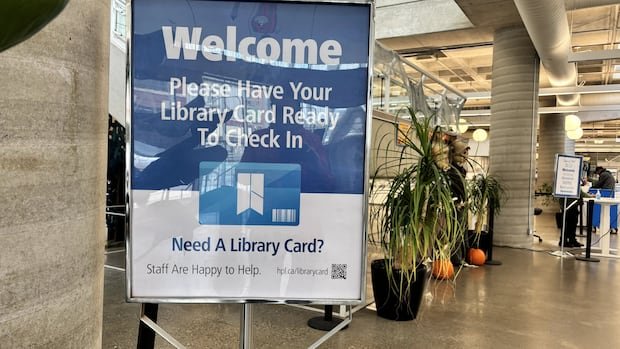
Visitors to the Central branch of Hamilton Public Library are now required to present a valid library card or be accompanied by a library member to gain entry. The library has displayed signs at the entrance informing individuals over 18 that a library card is necessary to access specific areas within the branch, with the option for guests to enter with a library member.
According to HPL spokesperson Shelley McKay, the decision to enforce the card policy stems from an increase in incidents and visible drug use near the Central Library on York Boulevard. To address these concerns and ensure the library remains open with continued access to services, the protocol has been reinstated.
Earlier this year, a pilot program was implemented to curb drug-related issues by requiring adults to scan a library card to access certain areas of the Central Library. The policy, exempting those under 18, was in effect for eight weeks and was later lifted on May 19.
Recent observations confirm that visitors must now show their library cards at the downtown branch to access specific areas beyond the entrance and computer lab. HPL has partitioned off access to certain spaces, with staff members stationed at the welcome desk to facilitate entry.
McKay clarified that while a library card is not mandatory for entry through York Boulevard or Jackson Square, adults must present a card or check in with a guest to access designated areas beyond the first-floor corridor and public computers. The decision to reinstate the card policy was made by library leadership, taking into account current conditions, past incidents, the pilot program’s outcome, and feedback from various stakeholders.
The policy, which is specific to the Central Library branch downtown, is anticipated to remain in effect until April 5, 2027. Changes have been made to the policy based on feedback from the pilot program, allowing library members to bring up to two guests without their own cards or IDs. Additionally, assistance in obtaining a library card is available at the information desk without the need for government identification.
Certain services on the first floor, such as social worker and community partner supports, public computers, printing, photocopying, and holds pick up, remain accessible without a library card. Visitors without cards can request access to the washroom with a security staff member accompanying them.
The pilot program, which received mixed reviews, was proposed as a measure to address drug-related incidents and rule violations at the Central Library. The initial concerns led to the approval of the check-in system by the HPL board, aimed at enhancing security and accountability within the premises.
Following the implementation of the card check policy, a review highlighted a significant reduction in overdoses, drug use, and emergency calls. The data revealed a substantial decrease in suspected drug incidents and emergency interventions during the pilot period.
The library’s engagement with community partners and commitment to addressing underlying issues while maintaining safe and inclusive spaces reflect ongoing efforts to uphold the well-being of library visitors and staff.

