
Tuesday’s primary elections served as new challenges for the direction of both political parties. The Democratic Party’s path, the impact of President Donald Trump’s endorsements, and the future of the Republican Party were all put to the test.
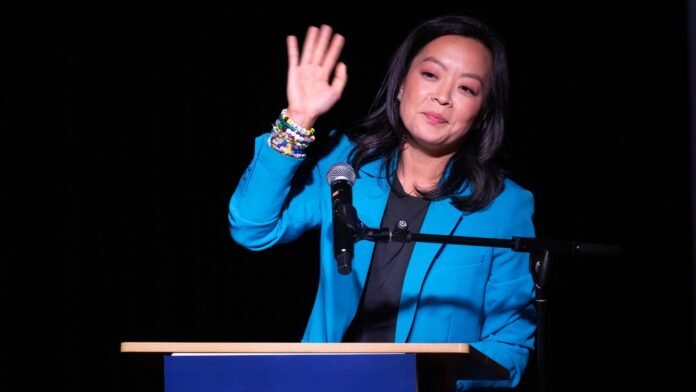
In a surprising turn of events, Milwaukee County Executive David Crowley, a moderate Democrat, narrowly clinched the Democratic primary for governor, defeating the progressive candidate, Wisconsin assemblywoman Francesca Hong. This victory marked a significant moment for progressives vying for a major party nomination in a critical battleground state.
Crowley, a former state lawmaker, positioned himself as the candidate most capable of taking on Republican Rep. Tom Tiffany, who had Trump’s endorsement, in the upcoming November elections. Emphasizing his executive experience governing the state’s most populous county, Crowley staged a comeback after temporarily withdrawing from the race due to struggles in gaining momentum.
The primary race witnessed a shift as Lt. Gov. Sara Rodriguez’s departure led to a push for Democrats to rally behind a moderate alternative to Hong. Crowley re-entered the race with support from outgoing Democratic Gov. Tony Evers, further solidifying his position.
Throughout the campaign, concerns were raised within the Democratic Party about Hong’s perceived extreme positions and her viability in a general election. Crowley’s narrow win highlighted the ongoing divide within the party between progressives and moderate candidates, underscoring the challenges faced in the current political landscape.
Notably, recent victories for progressives in congressional primaries across various states have added to the complexity of the debate over the party’s direction. Hong’s platform, advocating for working-class interests, universal childcare, and controversial stances such as abolishing Immigration and Customs Enforcement, sparked discussions on transformative change.
Despite facing scrutiny over past social media posts and aligning with leftist figures like Hasan Piker and Rep. Ilhan Omar, Hong’s campaign fell short in the final stretch. Crowley’s win positions him as a trailblazer, potentially becoming Wisconsin’s first Black governor, as he gears up to face Republican Rep. Tom Tiffany in the upcoming elections.
In another primary race for the U.S. Senate in South Carolina, the outcome remains uncertain pending an August 25 runoff. The contest between Sen. Darline Graham and Rep. Ralph Norman highlights broader questions about the Republican Party’s future, including the influence of President Trump’s endorsements and the legacy of the late Sen. Lindsey Graham.
The results underscore the mixed impact of Trump’s endorsement, with Graham not securing a direct victory in a field of ten candidates. The upcoming runoff may shed light on additional factors, such as Norman’s past stance on endorsing Nikki Haley over Trump in a GOP primary, potentially affecting his support base despite his conservative track record in Congress.
In Minnesota, former MyPillow CEO Mike Lindell, despite receiving Trump’s endorsement, finished second in the Republican governor’s primary. His loss to state House Speaker Lisa Demuth, a moderate centrist, signals a preference for electability over strict loyalty to Trump among Republican voters in the historically blue state.
Lindell’s defeat adds to a trend of Trump-backed governor candidates facing setbacks this election cycle, mirroring losses in Iowa and Georgia. The results reflect a strategic shift within the Republican Party as they navigate the evolving political landscape.
Overall, Tuesday’s primaries showcased the ongoing ideological and strategic battles within both major parties, setting the stage for a dynamic and competitive election season ahead.

