
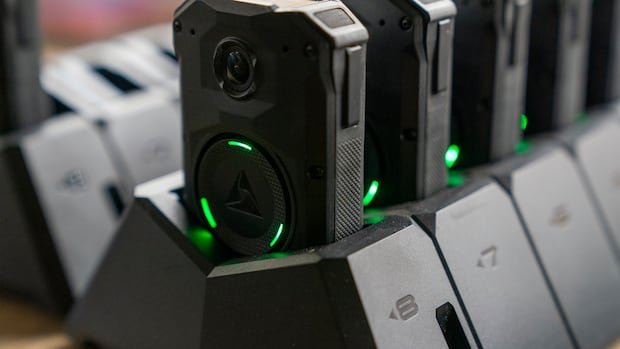
Montreal Mayor Soraya Martinez Ferrada has announced that the city’s police officers will soon be provided with body cameras. During a news conference held on Friday, Martinez Ferrada emphasized that the implementation of body cameras will serve to safeguard citizens, enhance police accountability, and promote transparency in law enforcement operations. The decision was revealed in the presence of Montreal police Chief Fady Dagher and Yves Francoeur, the president of the police brotherhood.
A total of 3,500 police officers are scheduled to be equipped with body cameras, while approximately 600 patrol vehicles will be fitted with vehicular cameras and automated license plate readers. Martinez Ferrada highlighted that these cameras will offer an unbiased record of police interactions. The initial deployment of the cameras is expected to take up to a year, with a gradual rollout process to follow.
To support this initiative, Martinez Ferrada allocated $40 million for body cameras in the city’s latest municipal budget. Additionally, the mayor disclosed plans to introduce a bylaw prohibiting insults directed at city employees, including police officers. If enacted, this bylaw would empower the police to issue fines for instances of verbal abuse towards themselves or other municipal staff.
This move comes in response to recent allegations of racial profiling involving officers from the Service de police de la Ville de Montréal (SPVM) in the city’s north end. Following revelations of discriminatory practices by officers at Station 39 in Montréal-Nord, Martinez Ferrada announced that an independent investigation will be conducted by the city’s public security commission.
In the words of Dagher, the implementation of body cameras represents a significant step towards enhancing transparency within the police force. He emphasized that these cameras, alongside enhanced training programs and recruitment practices, will contribute to improving police interventions. Dagher clarified that officers will be required to activate the cameras at the start of each interaction, ensuring continuous recording throughout the encounter.
Rémi Boivin, a criminology professor at Université de Montréal, expressed support for the use of body cameras as a means to increase transparency and accountability in police operations. While acknowledging the positive impact of this measure, Boivin cautioned that it alone would not address all existing challenges within the Montreal police force.
The decision to equip police officers with body cameras follows years of discussions, pilot projects, and shifting attitudes towards this technology in Montreal. Despite initial reservations, the city’s administration has now embraced the use of body cameras as a tool to foster trust and transparency in law enforcement practices. The recent approval from the Quebec government has paved the way for the acquisition of recording equipment for the SPVM, marking a significant milestone in enhancing police accountability and public trust in Montreal.

