
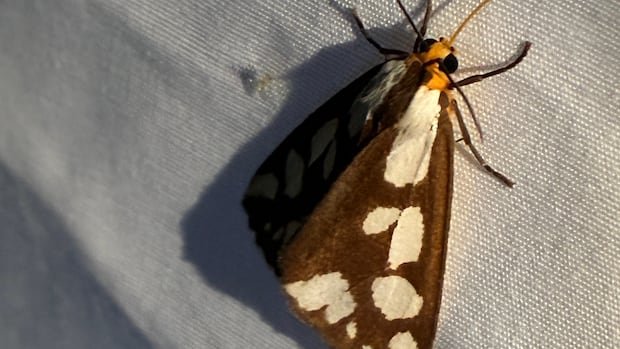
A non-profit organization based in Fredericton is spearheading a project aimed at studying the nocturnal insects that gather around porch lights. The Nashwaak Watershed Association is behind the moth monitoring initiative, calling on residents in the Fredericton vicinity to record the types of moths they encounter in their yards and nearby areas.
Allyson Heustis, the executive director of the association, highlighted that the project’s objective is to enhance understanding of the biodiversity in the watershed and the broader Fredericton region. By observing a variety of moth species, valuable insights can be gained regarding the local ecosystem, such as the health of surrounding forests and plant life.
The survey, funded by the New Brunswick Wildlife Trust Fund, kicked off in July and will continue until October. Participants are provided with a white sheet and a black light for the monitoring process. Volunteers set up the light 30 minutes before sunset, attracting insects to the sheet. After an hour, participants photograph the moths present on the sheet and upload the images to iNaturalist, a global research database widely used by scientists.
Heustis emphasized the importance of any species data collected, noting its relevance to various biologists. Zoë Acreman and her grandmother engaged in the project, documenting over 500 moths from several species while also recording additional data like location, time, temperature, cloud cover, and wind speed.
According to John Klymko, a zoologist at the Atlantic Canada Conservation Data Centre, New Brunswick boasts over 1,700 moth species, yet many remain undiscovered. Certain larger moth species, including the luna, cecropia, and sphinx moths, have experienced population declines, with Klymko suspecting similar trends among other species due to limited available data.
Factors contributing to these declines include habitat loss, herbicide usage, light pollution, and the introduction of a parasitic fly to North America to combat spongy moths. Moths play crucial roles as pollinators, bird food sources, and ecosystem stabilizers, making the monitoring project a significant undertaking.
Klymko likened moths to an environmental indicator, stressing the importance of abundant moth populations for ecosystem health. Understanding the well-being of different moth species can guide conservation efforts to support those in decline.

