
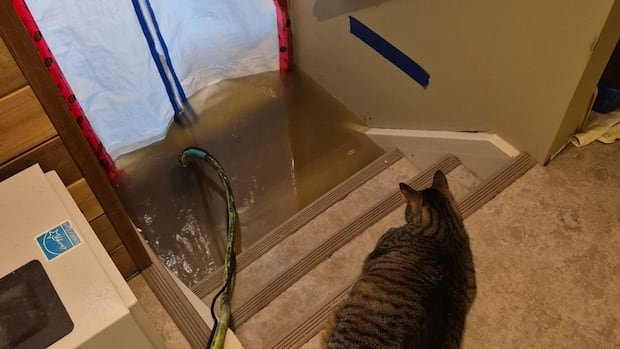
Over two weeks have passed since a team from Terry Davison’s insurance provider arrived at his residence in St. Catharines, Ontario, to assess and secure his possessions contaminated by sewage during the flooding and sewer backup incident in July. While he was initially able to reach out to his insurance company after the first storm, communication with his adjuster ceased following a subsequent storm on August 3rd, and he has not received a response since then.
Expressing his frustration, Davison shared with CBC Niagara his ongoing attempts to contact the insurance company through emails and phone calls, seeking acknowledgment of his correspondence. Concerned about health risks due to the lack of air conditioning and the contaminated basement aggravating his chronic obstructive pulmonary disease, he anxiously awaits the insurer’s restoration team to examine and confirm the damage to his furnace and hot water tanks.
Feeling at the mercy of insurance companies, Davison faced a pressing dilemma as the days passed. He pondered whether to wait for the insurer’s crew to address the damaged appliances or proceed immediately with his furnace specialist, risking potential out-of-pocket expenses of $8,500 if the insurance coverage is denied.
Anne Marie Thomas, the Director of Consumer and Industry Relations at the Insurance Bureau of Canada, advised homeowners to document all damages thoroughly before any cleanup or restoration process. Providing detailed estimates of losses can expedite the claims process amid the surge of claims following a major event like the flooding in St. Catharines.
Moreover, Thomas emphasized the importance of reviewing insurance policies to ensure coverage for risks like sewer backup and overland flooding, which may require additional add-ons. David Mayer from Rates.ca highlighted the impact of claim losses on premium rates, cautioning homeowners about potential increases based on the risk factors associated with their properties.
In cases where communication with insurance adjusters becomes challenging, Thomas recommended escalating concerns to claims managers or seeking assistance from internal or external ombudspersons within the insurance company for dispute resolution.
Tenants were also advised to acquire renter’s insurance to protect personal belongings and cover evacuation expenses in unforeseen events like floods, which may not be covered by landlords’ insurance policies.
By diligently documenting damages, understanding policy coverage, and seeking timely assistance, homeowners and tenants can navigate insurance claims effectively in the aftermath of natural disasters.

