
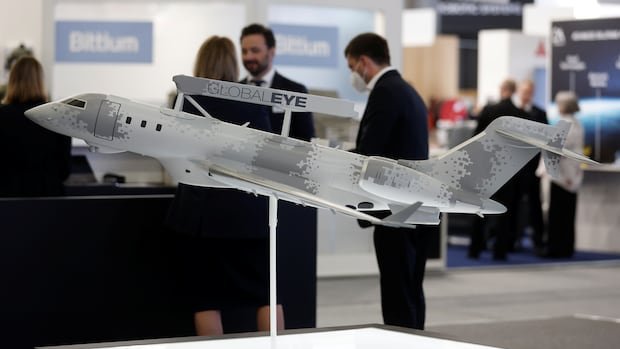
Ottawa initiated talks to procure six Saab GlobalEye surveillance planes without assurances that the aircraft would fully meet military needs, according to sources. A recent evaluation revealed that the GlobalEye only partially satisfies military requirements, necessitating modifications for operational readiness.
Prime Minister Mark Carney unexpectedly announced the plan to acquire these aircraft during the CANSEC arms exposition in Ottawa last May, catching many off guard, including the Royal Canadian Air Force commander present at the event. The deal includes establishing a production line in Canada for both domestic and international markets.
While the contractors involved in the negotiations remain confidential to maintain their relationship with the federal government, four of them shared insights anonymously. At the time of the announcement, the precise technical and operational needs for the new fleet of surveillance aircraft had not been communicated to potential bidders by the air force.
Stephen Fuhr, the key figure in military procurement for Ottawa, emphasized the importance of considering factors like costs, job creation, and geopolitical implications alongside military requirements. The Defence Investment Agency, led by Fuhr, disputed claims that there were no assurances about the GlobalEye meeting military needs, stating that the aircraft’s capabilities were known and deemed suitable for Canada.
Following the announcement, the Canadian military engaged with Saab in late June to outline specific plane features, with a subsequent meeting in August confirming deficiencies in the GlobalEye. Concerns include radar coverage limitations, crew stations, connectivity for NORAD integration, and lack of in-flight refueling capability for Arctic operations.
Saab has proposed modifications, such as additional radar installations and air-to-air refueling capabilities, to address these concerns. While the procurement process has drawn criticism for prioritizing economic benefits over defense requirements, officials defend the decision, citing the need to balance various considerations to meet national interests.
In response to criticisms, Saab has expressed readiness to meet Canadian military expectations, highlighting the flexibility of their engineering processes to accommodate customer demands. However, concerns persist regarding the aircraft’s current configuration and its alignment with essential military capabilities.
The evolving situation underscores the complex interplay between industrial policy objectives, defense priorities, and strategic alliances. Experts emphasize the need for clear government directives aligning defense policy with military requirements to avoid compromising operational effectiveness for economic gains.

