
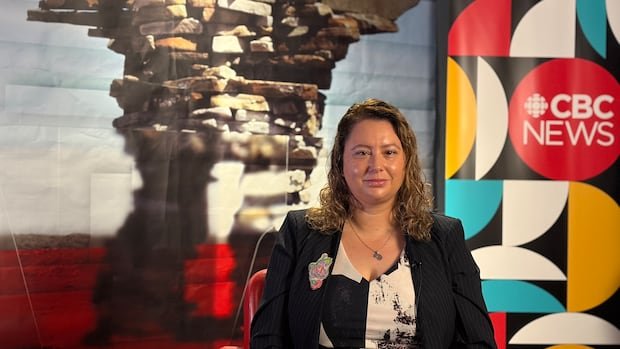
A growing number of Indigenous women in the North are engaging in field research, sparking a wave of inspiration among female scholars. Nicole Redvers, an associate professor at Western University and a member of the Deninu Kue First Nation in the N.W.T., noted a significant rise in female Indigenous students pursuing master’s and PhD programs in recent years.
Although specific data on Indigenous women involved in field research in the North is not readily available, statistics from Statistics Canada show an increase in Indigenous women entering post-secondary education in Canada between 2016 and 2021. Redvers advocates for a centralized university in the North to facilitate tracking of such information across all territories.
Various factors contribute to this trend, including heightened geopolitical interest in the Arctic, new funding opportunities, and greater visibility of female Indigenous researchers. Redvers emphasized the importance of representation in research spaces, stating that seeing oneself reflected in such environments is crucial for aspiring researchers.
Education and funding disparities lie at the core of many of the Truth and Reconciliation Commission’s Calls to Action. While academic institutions have started addressing systemic barriers affecting Indigenous students and researchers, Redvers highlighted that true change stems from Indigenous individuals driving progress.
Ashley Ens, a PhD student and member of the Nihtat Gwich’in in the N.W.T., highlighted the evolving role of Indigenous women as knowledge holders, emphasizing the legitimacy of Indigenous methodologies and community knowledge. She emphasized the need for academic spaces that support women in balancing their educational pursuits with family and community responsibilities.
Indigenous researchers are reshaping academic landscapes by anchoring their work in traditional knowledge and involving community members, fostering trust within communities. Laurie-Ann Lines, a senior researcher at the Institute for Circumpolar Health Research, praised the increasing presence of Indigenous female graduate and post-doctorate students, attributing this positive trend to collaboration with elders and community members.
Lines leads a project in the N.W.T. that unites elders, researchers, community members, and learners, showcasing a shift in research dynamics in the region towards inclusive and community-driven approaches. She emphasized the evolving nature of research in the North, highlighting the transition from research about Indigenous communities to research conducted with and for these communities.

