
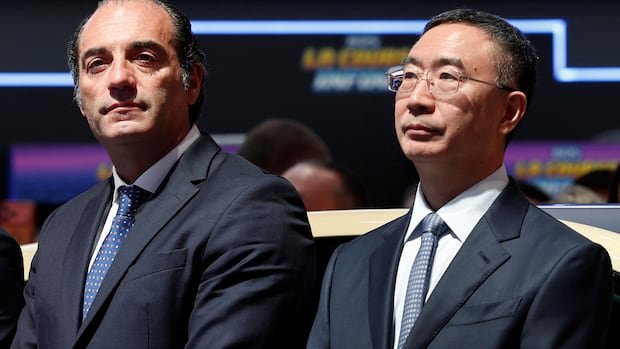
Europe’s leading automobile manufacturers, Stellantis and Volkswagen, showcased their confidence in electric vehicles at the Paris auto show, drawing inspiration from Chinese counterparts who are reshaping the industry landscape. Both companies are revamping their strategies to counter the rising competition from Chinese rivals in the European market. Stellantis, encompassing brands like Citroen, Peugeot, Opel, and Fiat, is leveraging partnerships with Leapmotor and Dongfeng to study Chinese technological advancements, aiming to enhance their own capabilities through collaboration.
Stellantis recently formed production partnerships with Leapmotor and plans to collaborate with Dongfeng as part of a strategic shift led by CEO Antonio Filosa. The European shift towards electric vehicles has gained momentum, driven by factors such as increasing fuel prices and the availability of more affordable models from Volkswagen and Stellantis. These manufacturers are facing stiff competition from Chinese companies expanding globally to offset a decline in their domestic market.
Volkswagen’s transformation has been influenced by China, with CEO Oliver Blume likening the country to a “fitness center” for the industry. While Volkswagen’s partnership with Xpeng primarily targets the Chinese market, potential collaborations in Europe remain theoretical. Partnering with Chinese companies in Europe could present risks, as it may facilitate competitors in localizing production and meeting European regulations.
Acknowledging China’s pivotal role, European automakers are now embracing the idea of learning from the Chinese industry expertise. Stellantis’ successful alliance with Leapmotor is a testament to this shift, while Volkswagen maintains a different approach with its Chinese partnerships. This paradigm shift signifies a reversal of roles, where Chinese automakers are now becoming the educators after years of learning from their European counterparts.

