
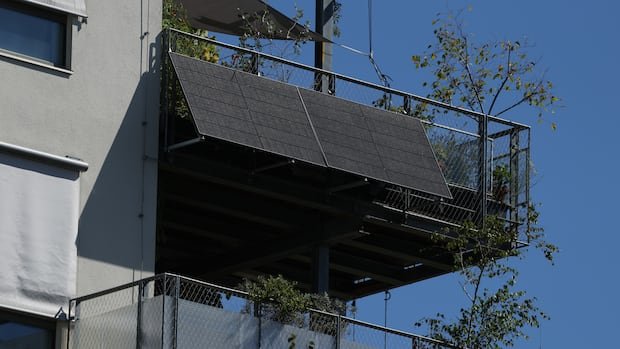
Amid a notable 34% increase in electricity rates, the Yukon Conservation Society is urging Yukon residents to seize control of their energy production. The non-profit organization recently utilized social media to promote the use of plug-in solar panels, a technology that is gaining traction due to escalating energy expenses. It is worth noting that plug-in solar panels are currently prohibited in Canada due to the absence of established standards and the hesitancy of provinces, territories, and utilities.
Sebastian Jones, a specialist in fish, wildlife, and habitat analysis at the Yukon Conservation Society, highlighted the frustration among many individuals over escalating utility bills and the Yukon government’s indefinite suspension of the microgeneration program. Jones emphasized that by connecting solar panels to a dedicated circuit, individuals can easily obtain panels and an inverter from retailers like Canadian Tire and initiate their energy production.
The Yukon ceased issuing permits for home solar panel connections in 2023 following disruptions to the electrical grid caused by these devices during rapid weather changes. Jones noted the challenge faced by Yukon Energy in managing sudden solar fluctuations and suggested that the utility has made no efforts to update the grid to accommodate solar power. In the interim, Jones views plug-in solar as a temporary solution that circumvents the need for specialized expertise or intricate setups.
Wayne Potoroka, a spokesperson for Yukon’s Community Services department, cautioned against the use of uncertified solar panels in Canada, emphasizing that installing uncertified electrical equipment is illegal. Yukon Energy refrained from taking a stance on plug-in solar since the technology is currently prohibited.
John Maissan, a former senior engineer at Yukon Energy, expressed concerns regarding potential electrical hazards and circuit problems if individuals were to directly connect solar systems to their home outlets without professional installation. However, he remained optimistic about the future of renewable energy in the region, pointing to the potential of batteries to absorb excess energy and stabilize grid fluctuations associated with solar power.
While a grid-scale battery project is underway, Jones, inspired by Germany’s “guerrilla solar” movement, believes that proactively embracing solar technology could spur the government to expedite its adaptation to modern energy sources. In Europe, the “balcony solar” concept took root in Germany, where renters without roof access began using plug-in panels to reduce energy costs, prompting the government to establish policies supporting plug-in solar and tenants’ access to solar power rights.
In the U.S., Utah became the first state to legalize plug-in solar following a bill introduced by state representative Raymond Ward. Ward was drawn to the simplicity and affordability of the technology, which fosters self-sufficiency and aligns with Utah’s increasing shift towards solar energy. Ward highlighted the success of plug-in solar in Germany and advocated for its adoption in the U.S. based on positive outcomes witnessed in Germany.
The Calgary Climate Hub initiated a national campaign urging Canadian lawmakers to embrace plug-in solar, emphasizing its potential to engage lower-income individuals and residents of apartments and condos in the energy transition. Joe Vipond, co-chair of the organization, stressed the importance of advocating for legal systems that meet safety standards and noted the growing global momentum around balcony solar.
While acknowledging the enthusiasm surrounding plug-in solar, Vipond emphasized the need for legislators and utilities to align with public sentiment and enhance regulatory frameworks to accommodate emerging solar technologies effectively. The ongoing dialogue around plug-in solar in Canada indicates a burgeoning interest in decentralized energy solutions, with stakeholders eager to explore the possibilities presented by this innovative approach.

