
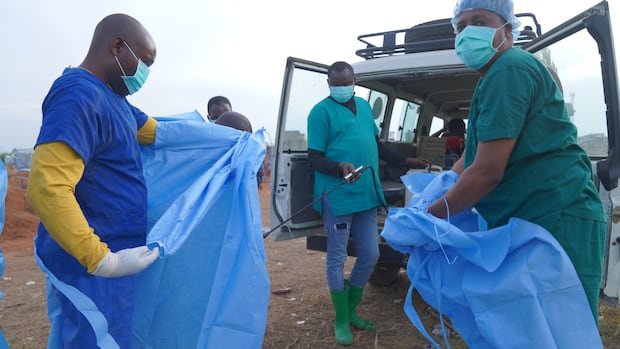
More than 2,500 individuals have lost their lives in the Ebola crisis in the Democratic Republic of Congo, with the disease rapidly spreading across an area larger than France, according to Julien Harneis, the senior United Nations Ebola coordinator. Harneis, speaking from Bunia in northeastern Congo via a video call, emphasized the urgent need for additional aid, as the current funding is expected to run out in the coming weeks.
Health workers in the region are facing hostility from local residents who are both scared and outraged by the outbreak. Tragically, some health workers have contracted the disease and succumbed to it. The situation has become dire, with a significant number of casualties among those providing medical assistance.
In a significant development, a batch of vaccines for a different strain of Ebola has been dispatched for advanced trials in the D.R.C. The country had requested these vaccines from the global Ebola virus disease vaccine stockpile just last week. The vaccine, known as Ervebo, is primarily designed to combat the Zaire Ebola virus strain. A portion of the allocated 70,000 doses will be utilized in a late-stage trial to determine its effectiveness against the current Bundibugyo virus.
The outbreak of the Bundibugyo strain of Ebola, which lacks approved vaccines or treatments, has become the most extensive in the history of the D.R.C., surpassing the previous worst outbreak from 2018 to 2020. Harneis stressed the escalating nature of the epidemic, expressing concern that the response efforts are struggling to keep pace with the outbreak’s rapid spread in a region plagued by decades of conflict.
The situation is exacerbated by attacks on healthcare workers and facilities, with youths instigating violence out of fear and frustration. Numerous health workers have been infected with Ebola, leading to a rising death toll among frontline responders. Amidst challenges such as attacks on aid workers and the spread of conspiracy theories, the ability of humanitarian organizations to provide assistance has been severely compromised.
Furthermore, issues with financial transactions have arisen due to disruptions in banking services caused by the cessation of commercial flights. This has hampered the distribution of essential funds to support the extensive workforce involved in combating the Ebola crisis in the region.

