
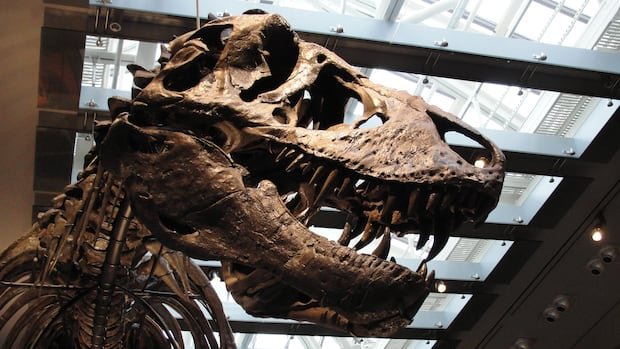
A new study has utilized chemical analysis to determine the body temperature of two Tyrannosaurus rex dinosaurs, shedding light on the long-debated topic of dinosaur thermoregulation. Aradhna Tripati, a geochemist and professor at the University of California, Los Angeles, co-authored the research, which was recently published in the journal Science Advances. Tripati explained the methodology in an interview with CBC’s Quirks & Quarks, highlighting the challenges of measuring the temperature of extinct creatures like T. rex.
Traditional methods of directly measuring temperature, such as using a thermometer, were obviously not feasible for dinosaurs that went extinct millions of years ago. Instead, scientists employed a chemical technique that examines variations in certain hard tissues like tooth enamel and eggshells, which retain temperature-related chemical signatures.
The analysis focused on the mineral bioapatite found in these tissues, where the bonding of carbon atoms with oxygen isotopes can indicate temperature levels. By comparing these isotopic patterns with those of present-day animals with known body temperatures, researchers were able to estimate the body temperature of ancient creatures, including dinosaurs.
Previous studies by UCLA researchers had already suggested that some dinosaurs, like titanosaurs and oviraptors, were warm-blooded based on similar analyses of eggshells. Additionally, teeth from plant-eating dinosaurs like brachiosaurs had been examined to understand their metabolic rates.
Measuring the body temperature of a Tyrannosaurus rex posed unique challenges due to its thin tooth enamel. The researchers overcame this obstacle by refining their technique using teeth from a megalodon shark before analyzing samples from a T. rex specimen named Thomas. By studying tooth enamel samples from various specimens, they estimated the body temperature of T. rex to be between 33.8°C and 38.8°C, comparable to that of large mammals and flightless birds.
The findings have significant implications for understanding the behavior and habitat range of Tyrannosaurus rex. A warm-blooded metabolism would have allowed T. rex to thrive in diverse environments, including colder regions like the Arctic. Paleontologists like Anthony Fiorillo have praised the study for providing compelling evidence of T. rex’s warm-blooded nature, offering new insights into how dinosaurs may have adapted to different climates.
Researchers like François Therrien, who analyzed troodon eggshells to determine their warm-blooded status, emphasize that the study advances our understanding of dinosaur physiology. While the warm body temperature of T. rex suggests high activity levels and adaptability to various conditions, debates continue regarding the specifics of their metabolism and energy requirements.
Tag: rewrite-pending

