
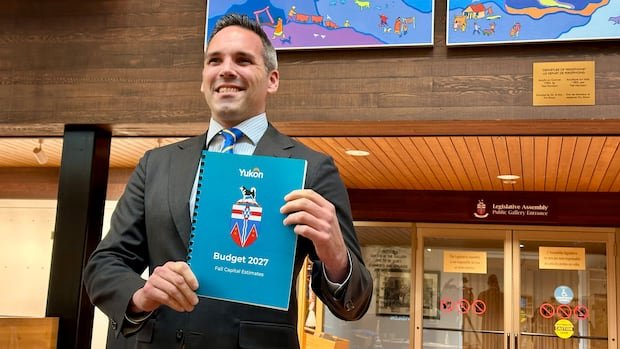
The fall session of the Yukon Legislative Assembly commenced on Monday with the premier presenting a new capital plan and updated budget estimates reflecting the territory’s improved financial situation. The government now anticipates a $53.7 million deficit for the current year, a decrease from the previously projected deficit of nearly $82 million, citing enhanced revenues and reduced expenditures as contributing factors.
Revised budget documents revealed an increase of $23.8 million in projected revenues for this year, attributed to higher federal transfers, taxes, and resource royalties. Additionally, projected expenditures have decreased by $4.2 million. Premier Currie Dixon, also serving as the finance minister, expressed satisfaction with the government’s progress towards fiscal stability.
The government’s net debt is now forecasted to reach $776.2 million by year-end, a lower figure compared to the earlier projection of $804 million. An economic update for the territory highlighted a slower GDP growth rate for the year, primarily due to decreased production at the Keno Hill mine and placer gold mining. Despite these challenges, the outlook for Yukon’s real GDP remains positive, supported by strong metal prices and anticipated growth in tourism revenue.
Premier Dixon unveiled new capital spending estimates for 2027, totaling $138.8 million for upcoming projects. The allocation includes funding for infrastructure projects such as the North Klondike Highway, the Shakwak corridor, the Whitehorse hospital expansion, and housing developments in Burwash Landing, Mayo, and Teslin. Opposition Leader Kate White commended the early release of the capital plan but expressed concerns about the government’s response to Yukoners’ affordability issues.
An economic update highlighted that inflation in the Yukon exceeds the national average, driven by higher shelter costs, food prices, and transportation expenses. Inflation is expected to average 4.6% this year, significantly higher than the earlier forecast of 3%, and is anticipated to remain elevated in 2027. Rising oil prices, particularly affecting diesel costs in Whitehorse, pose challenges for the territory, exacerbated by geopolitical tensions and trade disputes.
The conclusion date of the fall session of the Legislative Assembly is yet to be determined, with a stipulation that it will not extend beyond December 1.

