
Quebecers have chosen a separatist government, despite most not supporting a vote for independence. This outcome contrasts with the situation in 2012 when the Parti Québécois (PQ) led by Pauline Marois formed a minority government without a clear plan for a potential referendum.
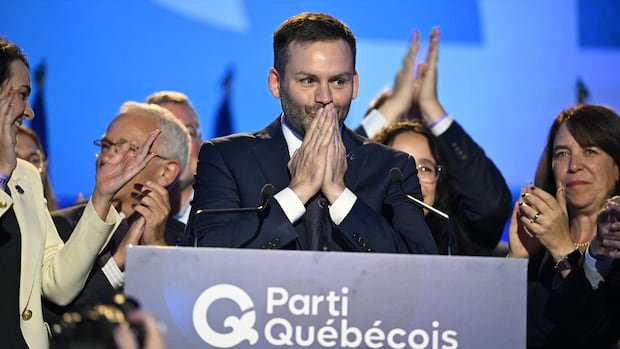
The current PQ leader, Paul St-Pierre Plamondon, has long advocated for a referendum within the first four years of a PQ term. Despite Quebec’s historical political divide and the PQ’s core mission, the party managed to secure a minority government three decades after the 1995 sovereignty referendum.
In his acceptance speech, St-Pierre Plamondon emphasized the significance of Quebecers achieving statehood and the accompanying recognition. He stated that gaining sovereignty was a matter of justice, equity, and survival for the francophone community in North America.
Despite the reluctance of Quebecers towards a referendum, the election results reflected a desire for change after eight years of the Coalition Avenir Québec (CAQ) government. The defeat of the CAQ, which failed to secure any seats in the National Assembly, underscored the voters’ rejection of prolonged rule by the incumbent party.
Although polls indicate low support for sovereignty among Quebecers, the PQ managed to form a minority government with just 28% of the popular vote, the lowest percentage in Quebec’s history to achieve such a feat. This outcome raises discussions about electoral reform.
As the PQ government considers a sovereignty referendum in the future, its fragile position necessitates collaboration with other parties to block any legislation enabling a referendum. The estimated cost of a sovereignty vote according to the PQ’s platform is $130 million.
The collapse of the CAQ benefited opposition parties, notably the Conservatives, who secured a historic breakthrough with targeted campaigns in the Quebec City region. The Conservatives won 19 seats, marking their first electoral victories in 90 years, with PCQ Leader Éric Duhaime clinching a seat in Chaudière-Appalaches on his third attempt.
The future actions of St-Pierre Plamondon regarding electoral reform, similarly to previous leaders like Legault, will determine whether he fulfills his promise to address the electoral system that propelled him to power.

