
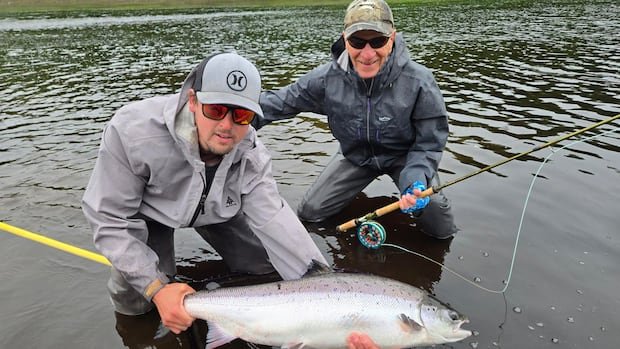
Veteran salmon anglers, guides, and outfitters in the Miramichi watershed all have vivid memories of their first encounter with a striped bass. Rip Cunningham, a member of the esteemed Black Brook Salmon Club, vividly recalls his initial striped bass catch at the confluence of the Main Southwest Miramichi River and the Cains River. At that moment, he mistook the fish for a salmon due to its unusual behavior of not jumping. This encounter left the seasoned guides in disbelief, highlighting the novelty of the situation.
The striped bass, once an unfamiliar sight to many in the area, is now perceived as a significant threat to the iconic wild Atlantic salmon population on the Miramichi River. The concern among the local fishing community is palpable, with fears escalating that the bass’s growing presence is jeopardizing the survival of juvenile salmon during their crucial migration to the ocean.
The surge in the striped bass population, exacerbated by the closure of the commercial fishery by the federal Department of Fisheries and Oceans in 1996, has triggered a cascading effect on the delicate ecological balance of the Miramichi River. Anglers argue that the uncontrolled growth of bass is decimating the recreational salmon fishery, which has long been a vital economic pillar for the communities along the river.
In response to the declining salmon returns and the escalating bass population, a group of concerned anglers, including Bradford Burns, Rip Cunningham, and Alex Mills, has taken legal action against the federal government. Their lawsuit aims to compel the government to reinstate a commercial bass fishery to mitigate the bass population explosion and provide a lifeline for the imperiled Atlantic salmon.
While the federal authorities have emphasized the complex interplay of various factors affecting salmon populations, including climate change and habitat degradation, anglers remain steadfast in their belief that the striped bass proliferation is the primary driver behind the salmon decline. The ongoing debate underscores the urgency of finding a sustainable solution to safeguard the future of both species in the Miramichi watershed.
As the region grapples with the ecological challenges posed by the striped bass resurgence, the fate of the Miramichi River hangs in the balance. The contentious issue has sparked a broader conversation about the need for coordinated efforts to preserve the unique biodiversity of the region while ensuring the prosperity of the local communities dependent on its natural resources.

