
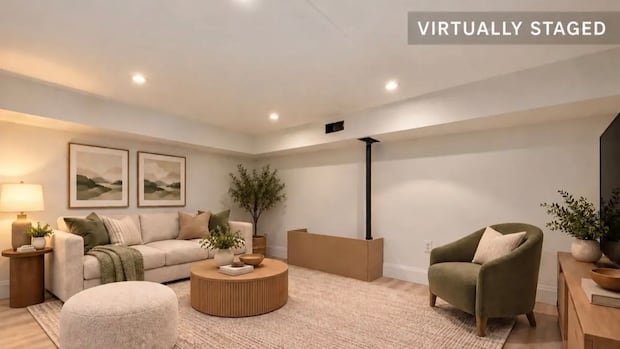
In the pursuit of a home in Ontario, you might encounter property listings where the furnishings seem off or the room dimensions differ from reality. Artificial intelligence (AI) is simplifying the process for real estate agents and sellers to digitally stage properties by adding furniture and décor to listing images without physically altering the space.
This technology provides a cost-effective way for potential buyers to visualize an empty area’s potential use, with regulations in place to safeguard consumers. However, real estate professionals caution that digitally staged photos could sometimes mislead buyers. Ravi Singh, a real estate agent at RE/MAX Hallmark Realty, highlights that discrepancies between original and virtually staged images can alter room characteristics like wall moldings, proportions, and lighting, leading to unmet expectations during property viewings.
Regulatory bodies like the Real Estate Council of Ontario (RECO) emphasize the importance of transparency in virtual staging practices. RECO states that consumers should easily identify when images have been digitally altered or AI-generated, requiring clear disclosures on images or within property listings. John DiMichele, CEO of the Toronto Regional Real Estate Board (TRREB), underscores the necessity for virtual staging to maintain factual accuracy to prevent misleading representations.
Looking ahead, the Ontario Real Estate Association notes that as AI tools advance, real estate organizations nationwide are working on updated standards for their use. Singh suggests that these standards should go beyond simple image labels and include disclosing the tools utilized. To navigate current listings effectively, prospective buyers are advised to pay attention to details, dimensions, and listing remarks, seeking clarification from their real estate agent if unsure about virtual staging in a property before scheduling a viewing appointment.

