
The head of the department overseeing the Canada Revenue Agency is supporting the agency’s choice to grant a $12 million security contract to a Canadian branch of a U.S. multinational corporation rather than to the Commissionaires.
Established in 1925, the Commissionaires is a non-profit private security organization aimed at providing job opportunities to veterans of the Canadian Armed Forces and police services.
Official documents reveal that in June 2026, the CRA awarded the contract to Universal Protection Service of Canada Corporation, a subsidiary of Allied Universal Security Services, a security firm associated with the U.S. Immigration and Customs Enforcement (ICE) deportation program.
This decision came after the Commissionaires were informed by the federal government that they would no longer have the first right of refusal for most government contracts.
Geoff Hamilton, the president and CEO of Commissionaires Great Lakes, stated that although the CRA contract was usually competitive, the Commissionaires had held the contract until the recent bidding process. The difference in the bids was $80,000, a minor fraction of the contract’s total value.
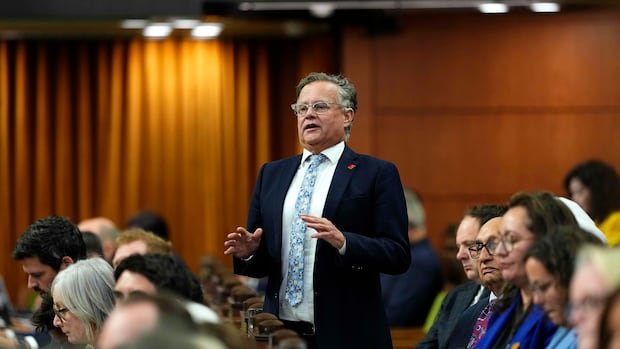
Conservative critic Michael Barrett criticized the government’s choice during a parliamentary session, emphasizing the importance of hiring Canadian veterans and companies. However, Wayne Long, the CRA’s secretary of state, defended the selection process, asserting that the cabinet was not involved in choosing the private company.
NDP MP Gord Johns also questioned the decision to award the contract to a foreign-owned company instead of the Commissionaires, especially given the latter’s support for Canadian veterans.
Allied Universal, in a statement, highlighted its Canadian registration, substantial local workforce, and extensive presence across the country. The company emphasized its long-standing relationship with the U.S. government and various federal agencies.
A spokesperson for Long reiterated that the CRA’s evaluation criteria are comprehensive and include factors such as past performance, business continuity planning, and workforce capabilities. The spokesperson stressed that decisions are made independently, without political intervention.

