
The Parliamentary Budget Office has revised its economic growth projections downwards for this year and next due to the impact of new U.S. tariffs and Canadian retaliatory measures. The latest forecast from the federal budget watchdog now predicts a 0.9% real gross domestic product growth for this year and a 1.5% growth in 2027. These figures represent a decrease from the previously estimated growth rates of 1.1% and 1.6% in June.
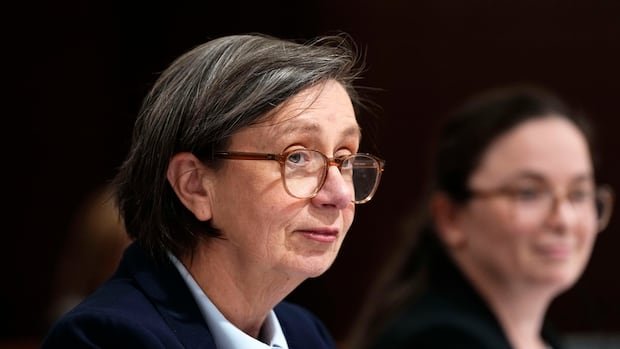
Annette Ryan, the parliamentary budget officer, stated that Canada is facing a more challenging economic and fiscal outlook than previously anticipated. She highlighted that additional trade measures and ongoing uncertainty are putting pressure on the country’s economic growth.
Following the breakdown of trade negotiations between Canada and the U.S. at the end of August, new rounds of tariffs and counter-tariffs have been imposed, further affecting economic prospects.
The PBO also projects a budgetary deficit of $63.3 billion for the 2026-27 fiscal year, with a peak of $70.2 billion in 2027-28. These deficits are now $3 billion higher per year on average over the period of 2026‑27 to 2030‑31 compared to the previous estimates, attributed to new spending measures outweighing stronger revenues.
Ryan emphasized the importance of the debt-to-GDP ratio as a key indicator of fiscal health, noting that it is expected to increase steadily over the next five years. She highlighted that the long-term economic and fiscal outlook for Canada will be heavily influenced by the effectiveness of recent capital budget investments in boosting productivity, economic capacity, and overall prosperity.
In its projections, the PBO anticipates that the Bank of Canada will begin raising its policy rate in early 2027 to maintain stable inflation expectations, with a target rate of 2.75% by mid-year. The watchdog also expects that higher energy prices will lead to elevated annual inflation rates, averaging 2.8% in 2026 before easing to 2.4% in 2027.

