
A discovery in the Bluefish Caves and a mine site in northern Yukon initially suggested the presence of an ice-age puma or cougar based on bone findings. However, DNA analysis from the University of California revealed a different story. The testing was conducted by Molly Cassatt-Johnstone, a lab technician at the time who had recently completed her undergraduate studies. The Yukon bones marked some of her first samples, leading to a surprising revelation during the preliminary analyses that these were not pumas as initially thought, but cheetahs.
Yukon paleontologist Grant Zazula vividly recalls the moment he received the message that altered their understanding of the species, indicating that the presumed cougars were actually cheetahs. Zazula highlighted the significant advancements in genetic analysis over the past twenty-five years, from being considered almost science fiction to now being a routine practice on permafrost-preserved bones from the Yukon.
Cassatt-Johnstone made history as the first to identify a Yukon Miracinonyx, popularly known as the extinct American cheetah. She now serves as the lead author of a paper published in Current Biology, offering fresh insights into the ice-age cat’s diet and range.
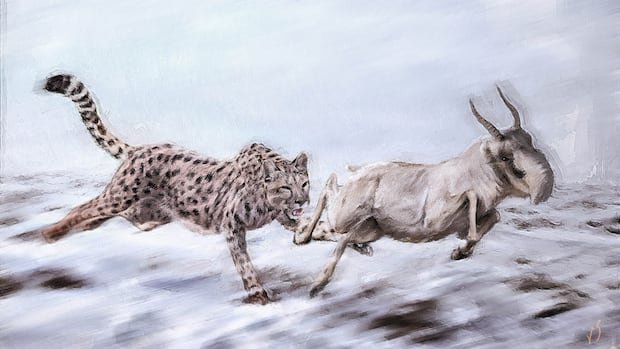
Researchers initially believed the American cheetah, resembling today’s agile cheetahs, would have evolved to pursue pronghorns across grassy plains. The unexpected discovery of these creatures in the Arctic tundra puzzled paleontologists, as pronghorns were never present in Beringia, the region where Asia and North America were once connected, including parts of Russia, Alaska, and the Yukon.
To unravel the mystery of how Miracinonyx thrived in this environment, a team of researchers from Canada and the U.S. employed stable isotope analysis. This technique, commonly used in forensics, examines chemical signatures to determine dietary habits, environmental conditions, and potential migration patterns. By analyzing bone samples from the cheetah’s paw and leg, researchers were able to ascertain that the Yukon cheetahs primarily fed on fish, a behavior uncommon among past and present-day felines.
This dietary revelation astounded paleontologists like Julie Meachen, who specializes in Late Pleistocene mammalian carnivores and has extensively studied this species in Wyoming. The Yukon cheetah’s unique adaptation to rely on abundant salmon runs for sustenance in a region teeming with formidable predators like Beringian lions and giant bears showcased their remarkable survival strategy.
Furthermore, extensive DNA analysis revealed that Miracinonyx was genetically closer to North American pumas than African cheetahs. Researchers also examined the genetic diversity within the cat population, determining consistently low numbers, which could have contributed to their eventual extinction.
Zazula proposed renaming this distinctive northern population from ‘American Cheetah’ to ‘Yukon Cheetah,’ emphasizing the importance of continuous paleontological discoveries reshaping our understanding of past ecosystems and species diversity.

