
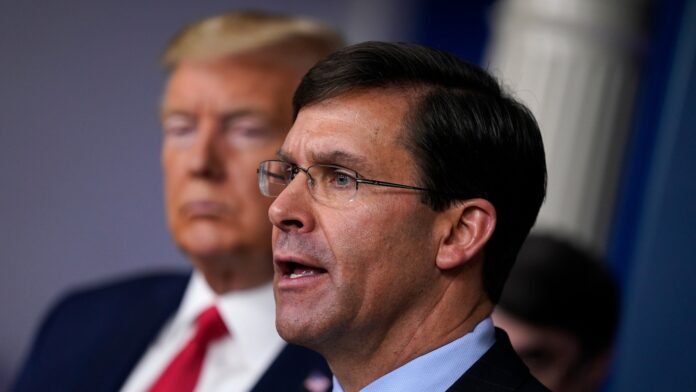
Former Secretary of Defense Mark Esper criticized Iran’s latest conditions for reopening the Strait of Hormuz, deeming them unreasonable and hindering progress in negotiations. Esper, who served during President Donald Trump’s first term, expressed disapproval of Iran’s demands, such as the complete withdrawal of U.S. forces from the region, reimbursement for war costs, lifting the blockade, and ending sanctions. He highlighted that Iran’s confidence in its negotiation stance is evident from the outlined requirements to restore shipping levels to prewar standards.
Esper emphasized that Iran’s assertiveness signifies its belief in holding the upper hand and prevailing in the ongoing situation. He noted that the recent demands indicate Iran’s growing confidence and strategic positioning globally, bolstered by the utilization of proxies to showcase power.
Additionally, Esper addressed the U.S. munitions shortage in Iran and the administration’s efforts to enhance production to mitigate the impact of the scarcity. Despite acknowledging the strategic necessity of these actions, he highlighted the time-consuming nature of building essential defense components like Patriot missiles.
Concerns were raised about the critically low stockpiles of ballistic missile interceptors in the U.S., posing constraints on potential military responses under consideration by President Trump. Trump acknowledged the need for continuous munition supplies, mentioning variations in availability across different types of weapons.
Esper attributed the munitions shortage issue to long-standing challenges dating back to the Cold War era, with further strain during the Iraq and Afghanistan conflicts. He pointed out that the situation was exacerbated during the Biden administration due to munitions allocations to Ukraine.

