
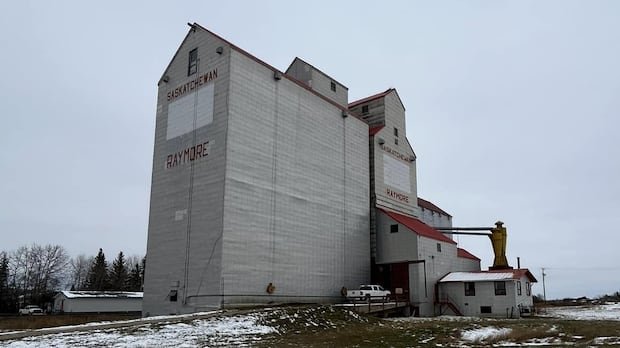
Another rural town in Saskatchewan is facing a challenge with its iconic symbol of prairie heritage, as the grain elevator in Raymore, located approximately 115 kilometers north of Regina, is at risk of being dismantled. Originally constructed in the 1960s to serve local farmers, the elevator ceased operations in 2006 and was later purchased by a nearby farmer, Duane Kirstein, to utilize as a storage facility.
After two decades of upkeep, Kirstein is finding it difficult to maintain the structure and has decided to put it up for sale. Despite offering it to the town, there has been little interest in its preservation. Kirstein mentioned potential commercial buyers and considering listing it with a real estate agency as options for the future of the elevator.
Having invested significant funds in refurbishing the elevator, including roof repairs and repainting costing almost $50,000, Kirstein expressed that the building no longer serves a practical purpose for his farm. Due to logistical challenges and evolving needs, he is looking to move on from the property. If a buyer is not found, the elevator may need to be demolished as it sits on leased Canadian National Railway land. Kirstein even expressed willingness to donate it to a historical society if necessary.
Dianne Eckel, the secretary treasurer of the Raymore Pioneer Museum, emphasized the historical importance of the elevator to the town, lamenting the potential loss of this landmark. With memories tied to the elevator dating back to the early 1900s, Eckel shared her personal connection through her family’s farming history and expressed sadness at the changing landscape with the disappearance of such historical structures.
Reflecting on the significance of the elevator and its role in the community, Eckel highlighted the impact of its potential removal on the town’s heritage and the generational divide in perception towards these agricultural landmarks. As towns transition away from traditional structures like grain elevators, the landscape and identity of these rural communities are undergoing significant transformations.
With the fate of the Raymore grain elevator hanging in the balance, the town faces a decision that goes beyond preserving a physical structure but also encompasses safeguarding its historical legacy and rural heritage for future generations.

